

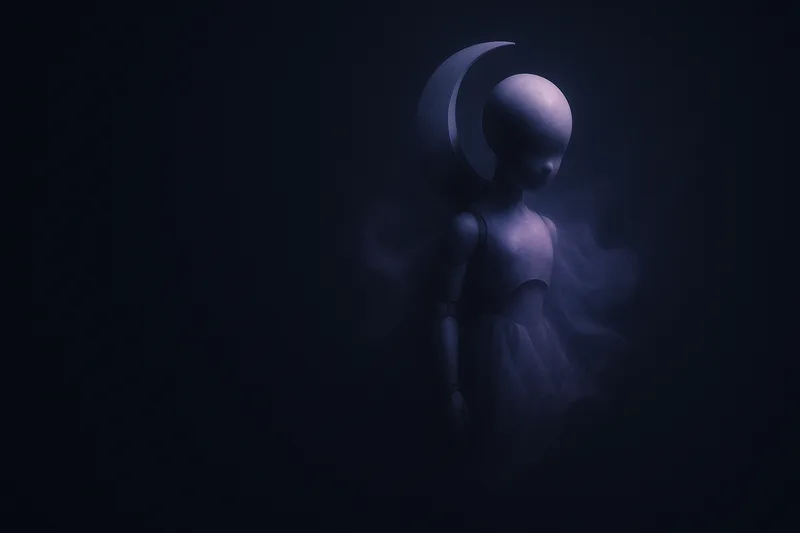
Doll Dream Meaning: A Complete Guide to What Dolls Represent in Dreams
Explore doll dream meaning with psychology, Jungian archetypes, and cultural lenses. Learn how context, emotion, and life events shape what doll dreams suggest.
Explore doll dream meaning with psychology, Jungian archetypes, and cultural lenses. Learn how context, emotion, and life events shape what doll dreams suggest.
A doll in a dream blends tenderness with strangeness. It looks human, yet it is not. It can trigger childhood memories and at the same time stir adult anxieties about control, appearance, or being watched. People often wake from a doll dream with a strong feeling that something important is being shown, even when the plot seems simple.
Meaning always depends on context. A doll cradled with care is not the same as a doll that follows you down a hallway. A doll in a shop window carries a different message than a family heirloom in a box. The dream may be exploring how you perform a role, how you care for something fragile, or how a part of you has gone numb. It might be pointing to a secret, a mask, an ideal you feel pushed to display, or a memory you are ready to rework.
This guide moves from quick insights to deeper lenses. We will look at modern psychology, Jungian archetypes as one perspective, and symbolic and cultural meanings. Take what lands, leave what does not. Your own associations, feelings, and life events are the strongest compass.
Dreams About Doll: Quick Interpretation
Many doll dreams circle around care, control, and identity. Dolls can stand for a childlike part of you, a relationship you feel responsible for, or a role you perform for others. When the doll is lifeless, the dream may show where warmth has faded. When the doll becomes alive, the dream may be testing boundaries or waking a voice that has been quiet. If the doll turns frightening, your mind could be dramatizing stress or a fear that something artificial is taking over.
If the setting involves display, like a shelf or shop, the dream can be about how you feel looked at, judged, or packaged. If the doll is broken, something may need repair, or you are releasing an outdated image of yourself. If the doll is precious or handmade, it might highlight love, heritage, or a meaningful bond that requires gentle attention.
Most common themes:
- Caregiving and responsibility
- Feeling controlled or objectified
- Childhood memory and innocence
- Perfectionism and performance
- A hidden voice seeking expression
- Grief, preservation, or memorializing a past self
- Boundaries, consent, and safety
- Playfulness and creativity
- Rituals of change or readiness for new roles
If you only remember one thing, remember the feeling in the dream and what part of your life carries that same feeling right now.
How to Read This Dream: A Three-Lens Method
A simple way to work with a doll dream is to look through three lenses. You do not need to pick one. Let them overlap.
First, emotional tone. Did the dream feel warm, eerie, tender, or charged with guilt or anger? Emotion in dreams is a highlighter. Strong feelings point to where attention is needed in waking life.
Second, life context. Consider your current responsibilities, roles, and pressures. Are you caring for someone, planning a family, or feeling on display at work or online? The doll may reflect how those roles feel inside you.
Third, dream mechanics. Note what the doll did. Did it speak, move, break, or watch? Where did the scene unfold, and what action happened around it? The mechanics often mirror real dynamics like control, silence, or growth.
Reflective questions:
- Which emotion was strongest as you interacted with the doll?
- Is there a relationship that feels one-sided or controlled?
- Do you feel expected to be perfect or cheerful on cue?
- What childhood room, toy, or memory did the dream echo?
- Who, if anyone, told you how to handle the doll, and how did you feel about that?
- Did the doll have a voice, and if so, what did it want?
- If the doll broke, what belief or image might be ready to soften or change?
- If you hid or displayed the doll, what part of yourself are you hiding or showing?
- How did others respond to the doll, and does that match a current social situation?
Psychological Perspectives
Modern psychology sees dreams as stories built from memory residue, emotions, and ongoing problem solving. A doll is a ready symbol for roles and attachment. It can represent a child or a dependency, a part of self that feels handled by others, or an ideal you try to maintain. If life feels staged or tightly managed, a doll may appear as a prop that carries your pressure.
Stress and conflict often show up as dolls that watch, speak without moving, or move without instructions. This can signal a boundary issue or a fear of losing control. Sometimes a doll shows up during periods of change, such as new caregiving duties, pregnancy, or grief. The doll can function as a placeholder for someone you miss or a role you are rehearsing.
Identity and avoidance can surface through doll dreams. If you feel on display, the doll mirrors the sense of being looked at rather than met. If your life feels numb, a lifeless or perfect doll may image a frozen part of you that needs warmth and permission to be imperfect. If you are avoiding a conversation, the doll that stares or follows can be your mind’s way of insisting the topic be faced.
Attachment patterns may also echo. People who grew up managing others’ feelings sometimes dream of caring for fragile objects or dolls. The dream can be an invitation to rebalance care, to include your own needs without guilt.
Here is a small working table that can guide self-reflection:
| Dream feature | Often points to | Try asking yourself |
|---|---|---|
| Doll that watches silently | Feeling judged, self-consciousness, social pressure | Where do I feel observed or rated right now? |
| Doll that speaks or moves on its own | Boundaries, autonomy, or a part of self seeking voice | What needs to be said that I keep postponing? |
| Broken or cracked doll | Outdated self-image, grief, readiness to change | What identity am I ready to retire or repair? |
| Caring for a doll like a baby | Caregiving roles, responsibility, fertility themes | Is my care balanced, and do I also receive care? |
| Displayed doll in a shop or shelf | Performance, perfectionism, public persona | Where am I performing rather than relating? |
| Haunted or frightening doll | Stress overload, unresolved fear, intrusive memories | What stressor keeps returning, and who can help me reduce it? |
Archetypal and Jungian Lens
From a Jungian perspective, which is one lens among many, a doll can reflect the Persona and the Shadow. The Persona is the social mask that helps us function. A doll’s clean face and fixed smile can stand for the side we present to the world. If the doll feels stiff or empty, the dream may be pointing to a persona that has become too tight. Your psyche might be asking for more spontaneity.
The Shadow contains qualities we push away. A doll that moves in unsettling ways, follows you, or speaks in a strange voice can dramatize disowned traits seeking reintegration. This is not necessarily negative. It may be the energy of anger, desire, or grief that wants a respectful place in your life. Meeting the doll can be a rehearsal for meeting yourself more fully.
Dolls can also touch the Child archetype. They may represent innocence, vulnerability, creativity, or dependency. If the dream highlights nurturing, the psyche might be tending to an Inner Child, inviting play or protection. If the dream highlights display and objectification, it may be critiquing a false innocence used to avoid conflict.
Some dreamers encounter a Wise Figure through a doll that suddenly speaks with clarity. Others meet a Trickster energy in a doll that misleads or plays pranks, showing where gullibility or cleverness is at work. In each case, the aim is not to stamp a fixed meaning but to observe which archetypal energy is active and how it relates to your current story.
Spiritual and Symbolic Meanings
In spiritual and symbolic work, dolls can mark rituals of change. They may hold memory, intention, or prayer. To many people, a doll in a dream echoes the act of shaping a form, then breathing life into it with attention. Whether or not you practice a tradition that uses figures or icons, your dream may be exploring how you invest meaning into objects and roles.
A doll that seems lifeless can symbolize a stage of incubation, a pause before growth. A doll that awakens can symbolize a calling for more presence in daily life. When the doll is cared for with reverence, the dream can encourage a gentle approach to your own growth. When the doll is scary, it can be a sign that borrowed forms or expectations have taken on too much power and need to be rebalanced.
Treat the image as a teacher, not a verdict. Let it ask questions that lead you back to your own wisdom.
Cultural and Religious Overview
Symbols travel across cultures, but meanings vary. Dolls range from children’s toys to ceremonial figures to artistic objects. Some traditions emphasize protection and remembrance. Others caution about objects that resemble people. Many people simply see dolls as playful and comforting. All of these angles can inform a dream.
This overview offers common themes found in several traditions. It is not a single rulebook, and communities differ within each tradition. The most reliable guide is your own experience, your family’s practices, and your values. If a specific cultural meaning rings true for you, consider it. If it does not, return to the emotional truth of your dream.
Christian and Biblical Angles
The Bible does not address dolls directly as modern toys. It does, however, address images and idols in various passages, which some Christians link to worries around objects that receive attention or devotion. That said, many Christian families treat dolls as simple toys linked to childhood care and play, not as religious concerns.
In a Christian dream context, a doll may raise questions about attachment to appearances. If the doll represents a perfect front, the dreamer might ask whether they are prioritizing image over humility or relationship. A doll behind glass could echo a life built for viewing rather than serving. This angle can be gentle, inviting the dreamer to realign with compassion, honesty, and the value of being known by God rather than polished for others.
Dolls can also point to stewardship of the vulnerable. If the dream involves caring for a doll as if it were a child, the scene might highlight a call to care for real children, elders, or those in need, including oneself. The dream could be checking whether care is grounded in patience and prayer rather than compulsion.
When a doll turns eerie or appears to take control, some Christians interpret this as a nudge to examine what has been given undue power in daily life. That could be social approval, a role, or a habit. Prayer, discernment, and pastoral counsel can help sort this out in a balanced way.
Common angles:
- Reflection on image versus sincerity
- Care for the vulnerable as an act of love
- Placing objects or roles in proper perspective
- Releasing perfectionism to make room for grace
Islamic Perspectives
Within Muslim communities, views on images vary, and context matters. Historically, there have been careful discussions around depiction, yet many families also recognize dolls as children’s toys used for play and learning. As with all traditions, practice and opinion differ among scholars and households.
In dreams, a doll may relate to responsibilities, family life, and modesty of intention. If the doll is treated with excessive attention, a dreamer might reflect on balance and whether objects or appearances have become a distraction. If the doll symbolizes a child, the dream can point toward mercy, care, and preparation for parenthood or community responsibilities.
A doll that behaves strangely can point to confusion or mixed influences. The dream may be asking for clarity of intention and better boundaries in daily life. Seeking knowledge and steady routines can restore calm. Many people also notice that stress and media influence can shape dream content, which is helpful to remember before drawing conclusions about religious meaning.
Common angles:
- Household balance and responsibility
- Intention and modesty in how one presents self
- Avoiding undue attachment to objects
- Strengthening clarity and boundaries
Jewish Interpretive Notes
Jewish thought spans many communities and approaches, from traditional to modern. Studies and commentaries over centuries include rich discussions of images, daily ethics, and how objects function in the life of a household. Dolls as toys are common in many Jewish families today, while ritual objects carry their own sacred meanings and boundaries.
In a dream, a doll may raise questions about tzelem, the dignity inherent in being human. If the doll stands in for a person, the dream might ask whether we are treating someone like an object or treating ourselves like a performance. There can be a pull to reduce life to routine or display. The dream may highlight the need to honor real relationship, compassion, and truth in speech.
If the doll is tied to family memory, the dream may be exploring how we remember ancestors while staying present. This does not imply a single view of the afterlife or ritual practice. It simply reflects the human task of carrying memory without becoming stuck in it. A doll that breaks can symbolize a shift in identity that makes space for growth and mitzvot that are alive rather than mechanical.
Common angles:
- Guarding dignity and avoiding objectification
- Balancing memory with present life
- Choosing living practice over empty display
- Attending to the ethics of care
Hindu Contexts
Hindu traditions are diverse, with regional practices that sometimes include figures used in festivals or household displays. In some communities, dolls or figurines appear in festive arrangements that celebrate stories, virtues, and the cycles of life. These figures are not toys but curated symbols. At the same time, children’s dolls exist as everyday playthings.
In dream work within a Hindu frame, a doll can symbolize the rupa, form, and how form is given meaning through attention. A lifeless doll that becomes vibrant may echo shakti, the energy that animates life, and your own readiness to engage more fully. A collection of dolls could represent the many roles and stories through which the self moves.
If the doll creates unease, the dream might be pointing to attachment to form without essence. This is an invitation to reorient toward dharma, to act with integrity rather than performing a role for approval. If the doll is cared for as a child, the dream can reflect household responsibility, fertility themes, or the protection of innocence.
Common angles:
- Form and essence, appearance and energy
- Household roles and care
- Cycles of life, growth, and festival memories
- Reducing attachment to external approval
Buddhist Readings
Buddhist perspectives on dreams often emphasize impermanence and the play of appearances. A doll can serve as a gentle reminder that forms are constructed and empty of fixed self. This does not dismiss their meaning. It asks how we relate to them.
If the doll is cherished, the dream may show wholesome care and compassion. If the doll feels eerie, it may reveal grasping at appearances or fear of losing control. The practice would be to notice clinging and aversion, then return to steady attention and compassion for oneself and others.
When a doll breaks, the image can be liberating. It can represent a release of a tight identity or a role you no longer need to hold so hard. When a doll speaks, it can represent a budding wisdom that appears through familiar forms. The call is to listen, then respond in a way that reduces suffering.
Common angles:
- Noticing attachment to image
- Bringing compassion to vulnerable parts of self
- Seeing roles as useful but not ultimate
- Choosing actions that reduce harm
Chinese Cultural Notes
Chinese cultures are varied, and practices shift by region, family, and generation. Toys and figurines hold many meanings, from simple play to decorative art tied to seasonal customs. Some households treat lifelike figures with caution, while others enjoy them as craft or collection.
In a dream, a doll may relate to family lineage, respect for elders, or hopes invested in children. A doll displayed prominently could reflect values around face, reputation, and social harmony. If the doll feels cold or staged, the dream could be asking for more warmth at home or a more authentic way to show care.
A broken doll can signal the need to mend relationships or soften expectations. A doll that comes to life might represent changing roles within the family, such as preparing for parenthood or caring for aging parents. The dream’s tone guides the meaning. If you feel comforted, the image may bless continuity. If you feel anxious, it may be a prompt to rebalance effort and rest.
Common angles:
- Family roles and continuity
- Reputation and authentic warmth
- Balancing duty with personal needs
- Repairing expectations and relationships
Native American Perspectives
Native American cultures are not a single tradition. They are many Nations with distinct languages, histories, and practices. Dolls appear in various ways, including toys, craft, and, in some Nations, figures with cultural or ceremonial significance. Any attempt to generalize will miss the richness of specific communities.
Respectful dream work within this context starts with your own heritage and teachings. If you are from a Nation with specific practices around figures, consider how those teachings guide meaning. A doll may represent teaching tools, family lineage, or protection, but the details vary. Many people outside these cultures best approach the symbol with humility, avoiding appropriation.
If the dream includes a handmade doll, it may evoke care, skill, and the transmit of culture through craft. If the doll is linked to a story or a seasonal teaching in your community, the dream may be a reminder to reconnect with those teachings. If the doll feels uneasy, it might be reflecting disrupted connection, asking for respectful repair through relationships and learning.
Common angles:
- Family, lineage, and teaching through craft
- Respect for specific community meanings
- Repairing relationships and learning from elders
- Avoiding generalizations and honoring boundaries
African Traditional Contexts
Across the African continent there are many cultures with unique histories. Figures and dolls can range from children’s toys to ritual objects. Some serve as fertility symbols, protective items, or representations used in storytelling and education. Meanings depend on the specific community, lineage, and purpose.
In dreams, a doll could mirror themes of protection, continuity, or the dignity of ancestors. If the doll is a common toy from your household, the meaning may be simple, linked to memory and care. If the doll resembles a known cultural figure, the dream might point toward identity, belonging, or a need to treat sacred items with respect.
A doll that breaks can invite reflection on repairing ties with family or community. A doll that moves or speaks may represent guidance calling for action grounded in responsibility, not fear. For people who are not part of a community that holds figures as sacred, it is respectful to avoid borrowing meanings and to focus on the feelings and personal events in your life.
Common angles:
- Protection, continuity, and family strength
- Honoring ancestors and cultural boundaries
- Repairing ties and sustaining responsibilities
- Distinguishing toys from sacred objects
Other Historical Angles
Dolls and figurines have long histories. In ancient Greece and Rome, children had articulated dolls as toys. Some were also offered in rites of passage, marking transitions from childhood to adulthood. In ancient Egypt, figures ranged from simple toys to symbolic items placed in burials to accompany the deceased. These uses shaped how people thought about care, memory, and continuity.
Medieval and early modern Europe saw the rise of fashion dolls used to display clothing styles, blending play with commerce and social norms. This history ties dolls to presentation and identity. In many places, folk traditions created handmade dolls for protection or seasons, though practices varied widely.
When a dream places a doll in a ritual setting or a shop window, it may be drawing on these long arcs of meaning. The image can blend innocence, display, and the thresholds of life. You do not need to be a historian to sense the message. Notice which thread resonates most: transition, memorial, artistry, or the pressure to present.
Scenario Library: What Happened in Your Dream?
Below are common doll dream scenarios organized by theme. Use the descriptions as possibilities, not prescriptions.
Threat and pursuit
Being chased by a doll
Common interpretation: A chase by a doll often represents pressure from an expectation that feels artificial. You may feel pursued by a standard of perfection, a public persona, or a role assigned to you. The dream dramatizes the fear that you cannot outrun this image.
Likely triggers:
- Performance review or public scrutiny
- Family pressure to act a certain way
- Social media exposure
- Avoiding an overdue conversation
- Watching horror media
Try this reflection:
- Where in life do I feel chased by expectations?
- What is one boundary I can set to slow the chase?
- Who can help me renegotiate this pressure?
A doll tries to attack or harm you
Common interpretation: An attacking doll can symbolize the feeling that a harmless front has become threatening. The image might reflect a small issue that has grown teeth because it was ignored. It can also show how self-criticism turns aggressive.
Likely triggers:
- Harsh inner critic
- Restless sleep and stress
- Conflict kept under wraps
- Startle from frightening content
Try this reflection:
- What small problem am I avoiding that now feels big?
- How can I soften my self-talk?
- What practical step would reduce this threat by 10 percent?
Injury and repair
A doll breaks, cracks, or loses parts
Common interpretation: Breakage often points to identity shifts. An image you have tried to keep perfect is ready to change. The dream can be sad or freeing. It may invite grieving the old role so you can step into something more alive.
Likely triggers:
- Career change
- End of a relationship
- Becoming a parent or caregiver
- Moving homes
Try this reflection:
- What am I ready to let go of, even if it is bittersweet?
- Who needs to witness this change with me?
- What small ritual could mark the transition?
You repair or sew a doll
Common interpretation: Repair suggests commitment to care. It can reflect mending a relationship, adjusting expectations, or tending to your own tired self. Precision in the dream highlights patience and skill.
Likely triggers:
- Couples repair after conflict
- Therapy or personal growth work
- Reconnecting with family
- Creative projects
Try this reflection:
- What bond or habit is worth repairing now?
- What tools or support do I need for this repair?
- How will I know the repair is good enough, not perfect?
Power and boundaries
A doll comes alive
Common interpretation: Animation signals rising energy or a voice returning. It can be exciting or scary. If thrilling, you are ready to bring play and honesty back into life. If frightening, a suppressed part of you may be asserting itself in a clumsy way because it has been ignored.
Likely triggers:
- New creative momentum
- Speaking up after silence
- Hormonal shifts or pregnancy
- Anxiety mixed with relief
Try this reflection:
- What wants life in me right now?
- How can I welcome this energy with boundaries?
- Who will support me as I try a new behavior?
A doll controls you or others
Common interpretation: Feeling controlled by a doll mirrors feeling controlled by a role, algorithm, or social expectation. The dream calls out the loss of agency and asks for limits and more authentic connection.
Likely triggers:
- Overmanaged workplace
- Overuse of social media filters
- Family rules that leave no room to breathe
Try this reflection:
- Where am I letting image outrank truth?
- What boundary could give me back 10 percent more choice?
- What conversation would make this explicit?
Care and protection
You care for a doll like a baby
Common interpretation: This often reflects caregiving readiness, tenderness, or anxiety about responsibility. The dream can be literal rehearsal, especially for new parents, or symbolic care for your own vulnerable parts.
Likely triggers:
- Pregnancy or trying to conceive
- New pet or project
- Caring for a parent or child
- Sensitive mood after family events
Try this reflection:
- What would basic, good-enough care look like this week?
- What support can I ask for so I do not burn out?
- How do I show care to myself, not just others?
You rescue a doll from danger
Common interpretation: Saving a doll points to protecting innocence, creativity, or memory. It can be a cue to protect time for art, rest, or a relationship that matters.
Likely triggers:
- Overwork and loss of play
- Guilt about neglecting a hobby
- A child in your life needs attention
Try this reflection:
- What is one small thing I will protect this week?
- Where can I say no to protect yes?
- How will I notice if I am stretching too thin?
Transformation and numbers
Doll transforms into a person, or vice versa
Common interpretation: Transformation shows a shift in how you relate to a part of yourself or someone else. A person becoming a doll can mean that you feel they have become distant or role-bound. A doll becoming a person can mean life and agency returning.
Likely triggers:
- Changes in relationships
- New understanding in therapy or reflection
- Breaking out of a strict routine
Try this reflection:
- Who in my life feels more like a role than a person right now?
- What would make this relationship feel more alive?
- What am I ready to humanize in myself?
Many dolls vs. one doll
Common interpretation: Many dolls can indicate overwhelm by roles. One doll can focus on a single responsibility or memory. If the crowd feels creepy, the dream may reflect social pressure or too many expectations at once.
Likely triggers:
- Multitasking and role overload
- Holiday or family gatherings
- Large teams or public events
Try this reflection:
- Which one role needs attention first?
- What can I postpone without harm?
- Who can help redistribute tasks?
Communication and place
A doll speaks to you
Common interpretation: A speaking doll represents a message from a quiet part of you. It can be simple, like asking for rest, or complex, like calling for honesty. Listen for tone and content. Often the words are less important than the feeling and timing.
Likely triggers:
- Inner debate on a decision
- Ongoing self-silencing
- Creative idea seeking airtime
Try this reflection:
- What did the voice want most?
- What action would honor that request in a safe way?
- What is the smallest step toward that action?
Doll in bed, house, work, school, water, or childhood place
Common interpretation: Location grounds the meaning. Bed can hint at intimacy or vulnerability. House points to personal life or family patterns. Work and school reflect performance and evaluation. Water adds emotion and cleansing. A childhood place points to early learning or memory.
Likely triggers:
- Home changes, career stress, study pressure
- Emotional release or exhaustion
- Revisiting old neighborhoods or photos
Try this reflection:
- How does this place match my current stressor?
- What skill from that setting can I use now?
- What boundary can calm this setting?
Others and witnessing
Someone else interacts with a doll
Common interpretation: Watching another person with a doll can show how you view their role or inner child. You might see their vulnerability or feel protective. If the scene worries you, it can reflect concern about their boundaries or yours with them.
Likely triggers:
- Parenting concerns
- Friend in a fragile phase
- Leadership responsibility for a team
Try this reflection:
- What belongs to them and what belongs to me?
- Have I asked what support they actually want?
- What is my role and where does it stop?
Modifiers and Nuance
Several factors shift the meaning of a doll dream.
Emotions: Fear can highlight boundary issues. Warmth leans toward care and creativity. Guilt can signal unmet needs. Relief can show a role finally fits better.
Frequency: A one-off dream may mirror recent media or a passing stress. Recurring dreams suggest an ongoing pattern that needs attention.
Lucidity and vividness: If the dream felt vivid or you knew you were dreaming, your mind might be practicing new responses. Choosing to set a boundary within the dream often mirrors readiness to do so when awake.
Life contexts: After a breakup you might see a doll to process identity and role changes. During grief, a doll can carry memory. During pregnancy, doll imagery can be rehearsal and anxiety mingled with hope. Postpartum dreams sometimes feature dolls as your brain rehearses care while you sleep.
Colors and numbers: Bright colors tend to lean toward play and creativity. Stark black and white can underline rigidity or clarity. One doll focuses the story. Many dolls spread it across roles.
Use this table to combine modifiers:
| Modifier | If present | Meaning often shifts toward |
|---|---|---|
| Emotion is fear | Any scenario | Boundaries, safety, overstimulation |
| Emotion is tenderness | Caring scenarios | Nurturing, readiness, gentle responsibility |
| Recurring weekly | Multiple settings | A stable pattern asking for change |
| Lucid moment | You set a limit | Growing agency and problem solving |
| After breakup | Broken or silent doll | Identity repair, releasing old presentation |
| During pregnancy | Caring or speaking doll | Rehearsal, hope, and realistic worry |
Children and Teens
Children often dream about toys because toys fill their days. These dreams tend to be literal. A child who plays with dolls or watches videos featuring dolls may replay scenes in sleep. That does not mean something is wrong. Look for how the child felt. Fear points to a need for comfort and safety routines. Curiosity and fun suggest healthy processing.
For teens, doll dreams can shift toward identity and performance. A teen might feel pushed to fit a look or role. A stiff or perfect doll can mirror social pressure. Gentle conversation that leaves room for choice is usually more healing than lectures.
How to talk with a child about a doll dream: invite the story, name the feelings, and normalize the experience. Avoid making scary meanings or implying that objects hold powers. Focus on safety and what helps the body feel calm at night. A simple bedtime ritual, like choosing which toys sleep on the shelf and which stay in a bin, can restore a sense of control.
For teens, help them link the dream to school, friends, or social media without shaming. Ask what support would make daily life feel more honest and less performed. Encourage limits on intense media near bedtime, especially horror content.
Checklist for caregivers:
- Ask the child to draw the dream and name the feelings.
- Reassure that dreams are stories the brain tells to sort out the day.
- Keep scary media away from bedtime.
- Create a safe room routine, including a night light if helpful.
- Offer a comfort object and a short breathing practice.
- If dreams recur with strong fear, consider gentle support from a trusted pediatric provider.
Is This a Good or Bad Sign?
Dreams are not omens in a fixed sense. They are messages in motion. A doll can point to care, pressure, or change. The same image can be healing or stressful depending on your life. Treat the dream as feedback, not fate.
Use this table to ground your view:
| Scenario | Often experienced as | Common life theme |
|---|---|---|
| Caring for a doll | Positive or tender | Readiness, caregiving, gentle responsibility |
| Doll breaks | Mixed, sad and freeing | Identity shift, releasing pressure |
| Doll chases you | Stressful | Performance pressure, boundaries |
| Doll speaks kindly | Encouraging | Inner guidance, creativity |
| Doll controls you | Overwhelming | Role rigidity, social image management |
| Many dolls watching | Unsettling | Feeling judged, crowd of expectations |
Practical Integration
Try a simple next-day plan to translate the dream into action.
Journaling prompts:
- What part of the dream felt most alive and why?
- If the doll had a message, what was it asking for?
- Where am I performing, and what would honesty look like today?
- What small repair am I willing to begin?
Boundary setting suggestions:
- Identify one expectation that belongs to others, not you.
- Decide one polite no you will practice this week.
- Reduce a public-facing task by 10 percent to make room for rest.
Conversation prompts:
- Tell a trusted person what the dream stirred up without seeking a fixed meaning.
- Ask for help with one concrete task related to care or repair.
Next-day plan:
- Five minutes of slow breathing in the morning.
- Write three lines about the dream and one action.
- Move your body for ten minutes to settle stress.
- Choose one playful act that feels like tending your inner child.
Let the dream nudge one small change rather than a grand overhaul. Choose a step you can complete in under 20 minutes. Reassess after a week, then add or adjust.
Seven-Day Exercise
Build momentum with a short, structured plan.
Day 1: Record the dream in detail. Circle the three strongest feelings. Write one sentence that sums up the message you hear.
Day 2: Identify a role that feels rigid. Adjust it by 10 percent. For example, shorten a chore, ask for help, or move a deadline if possible.
Day 3: Repair something small. Sew a button, fix a loose handle, or send a clarifying text. Let your hands practice care.
Day 4: Play for 15 minutes without outcome. Draw, sing, or build. Treat it like tending the doll’s spirit in you.
Day 5: Boundary day. Practice one no that protects a yes. Journal how it felt.
Day 6: Speak the unsaid. Tell someone one honest thing kindly. Notice if your body relaxes after.
Day 7: Reflect. What changed this week? What still needs attention? Choose one ongoing habit, such as weekly play time or a daily pause, to continue.
Reducing Recurring Nightmares
If doll nightmares recur, there are practical ways to dial down intensity.
- Sleep hygiene helps. Keep a steady bedtime, dim lights, and avoid intense media for at least an hour before bed.
- Stress reduction matters. A short evening walk or gentle stretching can steady the nervous system.
- Imagery rehearsal can help. Write the nightmare, change the plot so you set a boundary or receive help, then rehearse the new version in your mind for a few minutes during the day.
- Grounding techniques work in the moment. If you wake afraid, name five things you can see, four you can touch, three you can hear, two you can smell, and one you can taste.
- Keep a low night light if total darkness increases fear.
When to get support: If nightmares are frequent, cause daytime distress, or connect to trauma, consider reaching out to a qualified mental health professional. Support can include therapy approaches that teach skills for sleep and stress. If the dream relates to pregnancy or postpartum challenges, a healthcare provider can offer tailored guidance.
Frequently Asked Questions
What does it mean when you dream about a doll?
Dolls in dreams usually point to care, control, or identity. If you felt tenderness, the dream may be highlighting a nurturing role or a part of you that needs gentle attention. If you felt fear or pressure, the doll might symbolize an image or expectation that feels forced.
Look at what the doll did. A lifeless doll can show numbness or preservation. A doll that speaks can signal a quiet voice returning. The setting matters too. A shop or shelf suggests performance. A bedroom suggests intimacy or vulnerability.
Spiritual meaning of doll dream?
Spiritually, dolls can symbolize form given meaning. A lifeless doll may mark a pause before growth. A doll that awakens can reflect renewed presence and energy. If the doll was respected and cared for, the dream might point toward rituals of change and the need for gentle self-regard.
If the dream felt eerie, consider whether borrowed expectations have taken too much power. The invitation is to place form in service of essence and to act from values rather than image.
Biblical meaning of doll in dreams?
The Bible does not discuss dolls as modern toys. Some Christians connect doll imagery with concerns about image and idols, but many see dolls as simple playthings. In dreams, a doll may raise questions about sincerity versus display and the call to care for the vulnerable.
If a doll felt controlling or ominous, you might ask whether any role or habit has taken priority over compassion and honesty. Prayerful reflection and wise counsel can help sort the message in a balanced way.
Islamic dream meaning doll?
Perspectives vary. Many Muslim families view dolls as children’s toys, while keeping thoughtful boundaries around images in specific contexts. In dreams, a doll can point to family responsibility, modest intention, and balance in attention to objects.
If the doll behaved strangely, the dream might be asking for clarity and steadiness in daily routines. Reducing stress and seeking knowledge can help ground interpretation.
Why do I keep dreaming about a doll?
Recurring doll dreams suggest an ongoing issue with roles, boundaries, or care. Perhaps you feel on display or obligated to maintain a perfect front. The repetition is your mind’s way of keeping the topic on the table until something shifts.
Track when the dreams occur. If they spike during stress or public exposure, focus on boundaries. If they surge during caregiving phases, build support and rest into your routine.
Is a doll dream a bad omen?
Not necessarily. Dreams are feedback, not fixed predictions. A doll can be comforting, neutral, or stressful. The same symbol can be helpful one week and unsettling the next.
Anchor meaning in your feelings and context. If fear dominated, consider safety and boundaries. If warmth dominated, the dream may be blessing your capacity to care.
Doll dream meaning during pregnancy?
During pregnancy, dolls often serve as rehearsal. Your brain practices care, checks readiness, and processes normal worries. A doll can also reflect mixed feelings about identity changes and new responsibilities.
If the dream is soothing, you may be integrating the new role. If it is anxious, consider practical support, realistic expectations, and gentle routines that reduce overwhelm.
Doll dream meaning after a breakup?
After a breakup, a doll can symbolize an old role losing its shape. A broken doll may echo grief and the release of a polished image you held in the relationship. A doll that regains life can mark recovery and renewed agency.
Use the dream to ask what is ready to be repaired and what is better to let go. Choose one small act that supports the new chapter.
What if I dream of a doll watching me?
A watching doll often points to self-consciousness. You may feel judged by others or by your own inner critic. If the gaze felt heavy, reduce situations that amplify performance pressure and add moments of real contact with trusted people.
If the watching felt protective, it may symbolize a guardian role. Ask where you can accept support and set reasonable limits.
What does a broken doll mean?
A broken doll usually reflects an identity or ideal that no longer fits. It can be sad, yet freeing. The dream may invite you to mourn what is ending while opening to a truer form of life.
Repair in the dream points to mending. Letting the doll go points to release. Either way, the goal is a lighter, more honest way of being.
Why did the doll talk to me in my dream?
A talking doll suggests a message from a quiet part of you. The content might be simple, like rest, or specific, like speak up. Pay attention to the tone. Was it kind, demanding, or wise?
Try writing down the words and asking what small action would honor them safely. The message is often about agency and voice.
I dreamed of many dolls everywhere. What does that mean?
Many dolls often reflect role overload. Too many expectations can feel like a crowd watching. If the scene felt eerie, it may point to worry about judgment or performance.
Simplify where you can. Choose one role to focus on and postpone what is not urgent. Ask for help to thin out the crowd of tasks.
Why are doll dreams so creepy sometimes?
Dolls look human but are not, which can create the uncanny effect. At night, the brain pulls strong images to express stress or conflict. Horror movies and viral clips can also feed creepy content.
If the creepiness repeats, lower stimulation before bed, practice imagery rehearsal with a kinder ending, and strengthen boundaries in your daily life.
What should I do after a doll dream?
Do a quick check-in. Name the main feeling and link it to a part of your life. Then choose one small action, such as setting a boundary, starting a repair, or adding 10 minutes of play.
If the dream raised fear, add a calming routine before bed. If it sparked insight, tell a trusted person what you plan to do next.
Does a doll in water have a specific meaning?
Water often represents emotion. A doll in water can show feelings washing over a role or identity. If you rescued the doll, you may be protecting something tender. If the doll drifted away, you might be letting go of a rigid image.
Match the tone. Calm water leans toward soothing. Turbulent water points to stress that needs care.
What if someone else dreamt about me with a doll?
Dreams say more about the dreamer than about you. If someone tells you they saw you with a doll, they may be processing how they view your role or vulnerability. You do not need to adopt their interpretation.
If you feel comfortable, ask what the dream felt like to them. Use it as a moment for mutual understanding, not as a verdict about you.
Can a doll dream relate to childhood trauma?
It can, for some people. Toys can carry intense memories. If the dream connects to painful experiences, take it gently. You might choose to speak with a trusted therapist, especially if distress is strong or frequent.
At home, use grounding practices, steady routines, and supportive relationships. Let yourself move at a pace that feels safe.
Is there a positive meaning to a haunted-looking doll dream?
Sometimes yes. A scary image can signal that something ignored is gaining energy. Meeting it in the dream might be the first step in setting a limit or giving voice to a need. The fear shows importance, not doom.
If you want to shift it, practice imagery rehearsal. Write a version where you receive help, turn on lights, or kindly ask the figure to state its need.
How do cultural backgrounds change doll dream meanings?
Culture shapes how we see dolls, from simple toys to figures with sacred or artistic value. If your community holds specific teachings about figures, those teachings can guide interpretation. If not, focus on your feelings and current life.
When a symbol might be sacred in a tradition you are not part of, approach with respect. It is okay to draw from your own values without borrowing meanings that are not yours to use.
What does it mean if I see a doll in my childhood home in a dream?
Childhood settings bring early lessons to the surface. A doll in that space can point to how you learned to perform, care, or hide feelings. The dream may be inviting an update to those patterns.
Consider what was different in the dream compared to then. That difference often signals what wants to change now.