

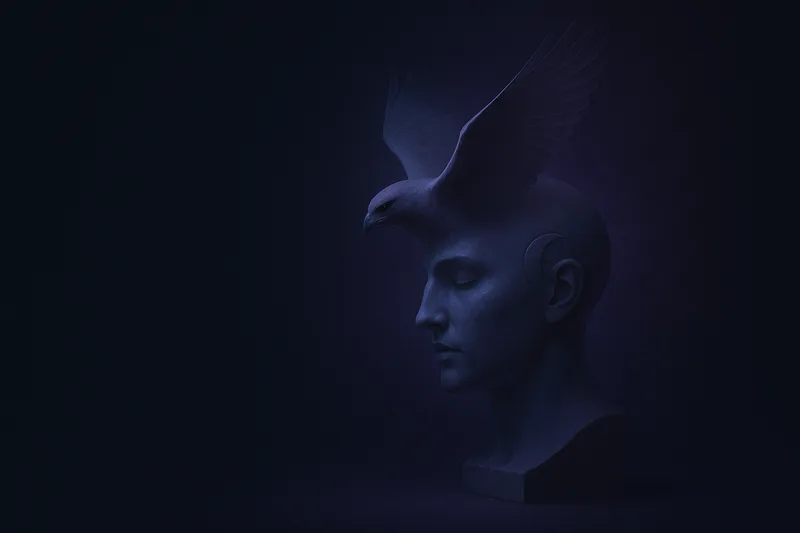
Hawk in Dreams: Focus, Power, and the Ethics of Seeing
Explore hawk dream meaning with psychological, spiritual, and cultural lenses. Understand common scenarios, emotions, and practical steps to use this dream wisely.
Explore hawk dream meaning with psychological, spiritual, and cultural lenses. Understand common scenarios, emotions, and practical steps to use this dream wisely.
A hawk does not flutter into a scene. It arrives with precision, head steady, eyes locked. When a hawk appears in a dream, the atmosphere shifts. The air seems thinner, the light cleaner, the stakes higher. People often wake with a sense that something has been singled out, as if the mind trained a lens on an issue it refuses to blur.
That intensity can stir mixed feelings. Some dreamers report a lift in the chest, like an invitation to rise above the noise. Others feel exposed, as if a witness has turned up, or a predator. Both responses are valid. Dreams borrow from a hawk's real-world traits, then weave them into your personal story. Context decides whether the hawk is ally, messenger, or challenger.
Think of this guide as a map you can walk through at your own pace. We explore psychological angles, archetypal themes, spiritual readings, and cultural perspectives. You will find examples that may fit neatly, and others that echo faintly. There are no fixed verdicts here. There are helpful directions, and questions that let you test meaning against your life.
Dreams About Hawk: Quick Interpretation
At a glance, hawk dreams cluster around sight, strategy, and the ethics of power. A soaring hawk can reflect your ability to rise above a problem and take a longer view. A hunting hawk can signal focus and resolve, but it can also highlight competitiveness or the fear of being targeted. A calm, perched hawk often points to attention without action, the waiting stage before a decision.
The feeling in the dream is the first filter. If you feel safe and clear-minded, the hawk may represent your own growing confidence. If you feel tense or cornered, the hawk may reflect pressure you sense from others, or from your inner standards.
A dream hawk can also mirror relationships. Are you watching someone closely, searching for flaws or opportunities, or do you feel like you are the one under scrutiny? The hawk may arrive when boundaries are thin, when privacy or autonomy needs protection.
Most common themes:
- Focus and selective attention
- Strategy, timing, and restraint before action
- Power dynamics, dominance, or assertiveness
- Fear of being watched, judged, or hunted
- Protection from above, guardian feeling
- Need for perspective and distance
- Ethical questions about pursuit and ambition
- Transition periods that require clarity
- Claiming authority without harshness
If you only remember one thing, notice how the hawk behaves and how that behavior matches something in your life that needs a clearer view.
How to Read This Dream: The Three-Lens Method
The three-lens method helps you move from vague impressions to usable insight.
Lens A, emotional tone: Your body and mood offer the quickest clues. Fear, calm, awe, irritation, pride, or relief will shape meaning more than any textbook symbol.
Lens B, life context: What is happening this week? Deadlines, relationship tension, money stress, health appointments, or creative push. The hawk often lands when something needs careful attention or protection.
Lens C, dream mechanics: The hawk's behavior, setting, and sequence are the grammar of the dream. Soaring signals overview, diving signals action, a stare signals scrutiny, a perch signals patience.
Reflective questions:
- In one sentence, how did I feel during and after the dream?
- What situation right now would benefit from a bird's-eye view?
- If the hawk targeted something, what is the equivalent in my life?
- Was I the hawk, the prey, or the observer, and what does that role suggest?
- Did the hawk respect boundaries, or break them?
- What did the setting add, home or work or school or open sky?
- Did time slow down or speed up, and when?
- If the hawk spoke or communicated, what tone did it have?
- What would be the gentlest next action that fits the dream's energy?
Psychology: Attention, Pressure, and the Skill of Distance
From a modern psychological frame, hawk dreams often track with attention and control. Hawks are selective hunters. Your mind may be rehearsing how to choose wisely, reduce distraction, or time a move. Many people have these dreams during performance pressure, leadership shifts, or boundaries being tested.
Stress can make the hawk feel predatory. When tasks pile up, the dream may translate them into a hunting presence. This does not mean danger from outside forces. It often points to how your own standards or responsibilities feel. The dream body responds to stress as if pursued. Knowing that can soften self-judgment.
Conflict and avoidance show up here as well. A hawk hovering overhead can mean you are not ready to act, but you keep scanning. That wait can be wise, or it can be avoidance in disguise. The dream helps you sense which it is by the mood. Calm hover suggests discernment. Agitated circles suggest stuckness.
Attachment and identity play a role. If you identify with the hawk, you may be claiming authority. If you fear it, you may be struggling with someone else's authority, or with your own internal critic. Either way, the figure invites a test of how you use power.
Memory residue matters. If you watched a nature documentary or saw a hawk on a commute, the image can appear as normal processing. Even so, your mind often layers personal meaning on top of recent stimuli.
Here is a small mapping to get you started:
| Dream feature | Often points to | Try asking yourself |
|---|---|---|
| Soaring high and calm | Gaining perspective, healthy distance | What can I step back from to see patterns more clearly? |
| Diving for prey | Decision, timing, assertive move | Where is a decisive action overdue, and what is a respectful way to do it? |
| Perched and watching | Monitoring, patience, boundary setting | What do I need to watch without intervening yet? |
| Being chased by a hawk | Pressure, performance anxiety, fear of scrutiny | Who or what feels like it demands perfection from me? |
| Injured or caged hawk | Blocked drive, ethical doubts about power | How am I limiting my own focus or misusing it? |
| Hawk in home or workplace | Boundaries in private or professional life | What privacy or role clarity needs attention here? |
Archetypal and Jungian Lens
This is one perspective among many. In a Jungian frame, the hawk sits with sky and sun imagery, associated with clarity, watchfulness, and the messenger theme. Birds often bridge earth and sky, matter and idea. The hawk is not flighty. It is precise, which makes it a strong carrier of the function Jung called thinking, the capacity to discriminate and choose.
The shadow may appear as the hawk's harsh side. If you have disowned assertiveness, the hawk can arrive as a fearsome hunter. If you overidentify with control, a wounded hawk can point to needed humility or rest. Archetypes do not judge. They show patterns. You choose how to engage them.
Dreams sometimes place the hawk near the sun or on high cliffs. That can echo a call to align with a guiding principle, to see from a higher order rather than from momentary emotion. The risk is detachment without empathy. The hawk asks for both clarity and care.
If you felt you were the hawk, note how your body moved. Smooth, patient, and ethical action may be your mind's way of inviting mature authority. Frenetic diving may show that urgency is outpacing wisdom. The image becomes a barometer of how you hold power.
Spiritual and Symbolic Readings
Many people read a hawk as a messenger of attention and alignment. Spiritual symbolism often highlights the capacity to rise, then return with purpose. In that pattern, the hawk encourages disciplined vision. It does not fly in circles for the thrill. It surveys, then acts.
If you practice rituals of change, a hawk dream can mark a threshold. You may be moving from scattered effort to focused intention. Some readers treat the hawk as a sign to clean up distractions, to honor a clear yes or no, and to treat power as responsibility.
People who have experienced heavy surveillance or judgment may find hawk dreams sensitive. In a spiritual frame, the dream can invite a gentler witness. It can remind you that seeing does not have to mean controlling. You can watch your own thoughts with kindness, and watch others with respect.
A hawk dream asks, what will you do with the ability to see? Vision without care cuts. Care without vision drifts. Hold both.
A personal symbol is always personal. If hawks remind you of a relative or a place you love, that bond outweighs general meanings. Lean on what helps you live with integrity.
Cultural and Religious Overview
Across cultures, birds of prey have carried themes of sight, courage, protection, and royal authority. Even so, meanings vary. Some traditions place the hawk alongside war and hunting. Others see a guardian or a guide. Within each tradition, communities and teachers differ.
Treat the following sections as respectful summaries. They offer common themes, not rules. If you belong to one of these traditions, your upbringing and community teaching should guide you. If you do not, approach with curiosity and care, and avoid lifting symbols out of context.
As you read, notice which images feel warm or distant. Accurate interpretation respects your lived experience and your values.
Christian and Biblical Perspectives
In the Bible, birds of prey appear in lists of unclean animals, and they also show up in imagery about desolation, vigilance, and God's care for creation. Translations vary in naming hawk versus other raptors, but the larger thread links birds of prey with watchfulness and the forces of nature that sit under divine sovereignty.
A hawk dream within a Christian frame can raise questions about discernment. Are you being asked to see through confusion and choose the good more clearly? The hawk's focus can mirror the call to test spirits and motives, to avoid being swept by gossip or fear. If the dream includes Scripture, prayer, or church settings, it may be pointing to specific moral choices.
Some Christians read the hawk as a symbol of protection or the need to guard the heart. If the hawk perches near your home, the image can prompt prayer about boundaries in family life or online spaces. If the hawk hunts in a troubling way, the dream may be naming predatory behavior in a social or work circle, and inviting courage to address it.
Common angles:
- Discernment between competing voices
- Guarding what is entrusted to you
- Humility in leadership, power with service
- Release of harsh judgment in favor of patient truth-telling
The tone matters. If the dream feels peaceful, it may align with trust and provision. If it feels sharp or accusatory, consider whether shame has crept in. Many Christians find it helpful to pray with the dream, seek wise counsel, and test any message against core teachings of compassion and integrity.
Islamic Perspectives
Classical Islamic dream literature treats birds with attention to their behavior and the dreamer's station. Meanings depend on whether the bird is wild or tamed, beneficial or harmful, and how it interacts with the dreamer. A hawk, like other raptors, can represent authority, rank, or a formidable person. Outcomes depend on context, ethics, and the dreamer's state.
If the hawk is calm on the hand or shoulder, it can suggest potential honor or responsibility that sits well with you. If the hawk attacks, it may reflect a powerful adversary, internal or external. The dream can prompt reflection on justice, restraint, and the consequences of force.
Many Muslim readers pay attention to adab, the etiquette of interpretation. One looks for beneficial meanings, avoids fearmongering, and remembers that only God knows the unseen. If the dream encourages better conduct, clearer focus in prayer, or honest work, it is considered a blessing regardless of dramatic imagery.
Common angles:
- Power that must be guided by faith and ethics
- Protection of dependents, fairness in leadership
- Patience and timing in making moves
- Avoiding arrogance, seeking knowledge to balance strength
Context in community matters. Some families associate hawks with land, hunting, or specific memories. That personal layer should be honored alongside classical sources.
Jewish Perspectives
In Jewish texts, birds of prey are listed among non-kosher species. Yet Jewish thought also includes rich metaphors about wings, watchfulness, and God's care. The hawk as a dream figure can bring up questions of ethical sharpness and the limits of predation.
A Jewish reading might ask, what kind of focus am I applying to my choices, and does it serve life? If the hawk is circling a community space, the dream can point to guarding boundaries around speech, money, or dignity. Lashon hara, harmful talk, often hides behind a claim of vigilance. The hawk can challenge that habit, turning scrutiny into mindful care.
If the hawk feels protective, some people read it as a reminder to look out for the vulnerable. If it feels intrusive, it may be a lesson in tzniut, modesty not only in dress, but in how we look at others. Seeing is never neutral. The dream can nudge you toward ethical seeing, paired with compassion.
Traditions differ by community, language, and family history. Personal associations, like a hawk that appears during a trip to Israel or a childhood memory in the diaspora, often shape meaning more than general symbols.
Hindu Perspectives
In Hindu traditions, birds often serve as vehicles of deities or as metaphors for consciousness and liberation. While the hawk is not as central as the eagle or kite in some texts, its traits align with attention, courage, and the penetrating gaze of knowledge. The hawk's flight suggests a movement from limited perspective to a wider awareness, then a return to action in the world.
A hawk dream might prompt reflection on dharma. Are you aligning action with your role and stage of life? The hawk can echo the need for disciplined focus in practice, whether that is study, meditation, or service. Precision in attention can be a spiritual quality, not just a work skill.
If the hawk hunts, the image can invite you to examine desire and attachment. Are you pursuing something that binds or frees? The same energy can be directed toward insight or toward grasping. Tone and context will tilt meaning.
Some families hold protective views of raptors, especially when linked with shrines or sacred landscapes. That personal devotion layer deserves care. The dream can serve as a reminder to act with courage while softening pride and rigidity.
Buddhist Perspectives
Buddhist readings often focus less on fixed symbols and more on the mind's states. A hawk can represent sharp, sustained attention. It can also mirror craving when it hunts aggressively, or wise discernment when it observes without grasping.
If the hawk is calm and spacious, the dream may reflect mindfulness growing in daily life. You notice thoughts without chasing them. If the hawk dives and agitates the scene, it may point to habits of pursuit that create suffering, like the need to be right or to win.
The setting matters. A hawk flying over water can highlight the meeting of clarity and emotion. A hawk in a monastery or meditation hall might suggest that practice is gaining precision, or that you are striving too hard. The body feeling will help you tell the difference.
The invitation is simple. See clearly, act kindly, release grasping. The hawk becomes a teacher when paired with compassion.
Chinese Perspectives
In Chinese art and folklore, images of hawks or eagles often evoke courage, heroism, and high ambition. Paintings of a hawk on a pine may celebrate steadfastness and upright character. The bird's sharp eye is admired, linked with vigilance and strategy.
A dream hawk in this frame can call you to disciplined effort. It can also raise humility, reminding you not to overreach. The Confucian thread values moral cultivation alongside achievement. A hawk that perches calmly can symbolize readiness paired with restraint, a refined balance of li, propriety, and yi, righteousness.
If the hawk disrupts a home or family scene, consider harmony. Are you pushing ambition at the cost of relationship? If the hawk protects, you may feel relieved, as if an elder or ancestor stands watch. Many families mix folk beliefs with personal stories, so the dream may carry a distinct family echo.
A practical takeaway is to refine your aim. Choose one worthy goal, then pursue it with patience and integrity.
Native American Perspectives
Native American traditions are diverse, and teachings about raptors vary widely by nation and community. Some Nations honor hawks for their vigilance and agility. In certain contexts, hawks appear in stories as scouts, messengers, or protectors. Interpretations are context specific and often tied to ceremony, land, and language.
If you have a family or community connection, your own teachings should guide you. A dream hawk could reflect responsibilities, the need to watch over kin, or the reminder to keep your vision clean. It could also be a warning against reckless pursuit. Tone, behavior, and location in the dream carry weight.
For those outside these traditions, it is respectful not to borrow ceremonies or claim messages you were not given. You can still learn from the pattern of watchfulness, courage, and balance. Many teachings emphasize right relationship with animals and land, which includes restraint and gratitude.
Common angles heard across several communities include attention to signs in nature, the link between clear seeing and ethical conduct, and the way responsibility grows with skill. These are broad themes, not uniform rules.
African Traditional Perspectives
Across African cultures, birds of prey appear in proverbs, folktales, and ritual contexts with varied meanings. There is no single African view. In some regions, hawks are admired for alertness and speed. In others, they are treated with caution because of their hunting nature. Associations can include guardianship, royal imagery, and the power to see from afar.
A dream hawk might echo a call to protect family or land, to set boundaries with neighbors or colleagues, or to honor elders' guidance. If the hawk is disruptive, the dream can point to envy, rivalry, or misuse of authority. Many traditions emphasize harmony and responsible leadership. The hawk's sharpness can be a gift when it serves community, and a problem when it serves only pride.
If you come from a lineage with specific symbols, those teachings take precedence. Personal rituals, such as offerings of gratitude or prayers for clarity, may be appropriate within your tradition. For those outside, learning through respectful sources and focusing on shared virtues like courage and care is a good path.
Other Historical Lenses
In ancient Egypt, the falcon and hawk forms associated with Horus emphasized kingship, protection, and the unblinking eye that watches over the land. The image carried a sense of cosmic order, sky oversight, and the union of sight with right rule. Dreams featuring a hawk in that spirit can raise questions about authority used well.
In Greco-Roman lore, raptors sometimes served as omens linked to gods or to military fortunes. The practical lesson carries forward. People have long read these birds as signs about leadership and timing. A dream might simply reflect your own leadership moment, large or small.
Medieval bestiaries in Europe mixed moral commentary with animal traits. Hawks could be associated with nobility and hunting. The moral note warned against cruelty and vanity in sport. That note remains useful. When power appears in dreams, so does the test of character.
Scenario Library: How the Hawk Shows Up
Below are common hawk dream scenes with practical angles. Read for tone, role, and setting. Match what lands with your life.
Pursuit and Chase
A hawk chases you across a field
Common interpretation: This often points to pressure you feel from work demands, school expectations, or a person whose standards loom large. The field suggests exposure. You may feel there is nowhere to hide. The dream body runs from scrutiny, real or imagined. Sometimes it signals avoidance of a decision.
Likely triggers:
- Deadlines and evaluations
- Social media exposure or public speaking
- Fear of criticism from a specific person
- Self-imposed perfectionism
- A recent mistake you worry others noticed
Try this reflection:
- What exactly am I running from, and who holds that power in my mind?
- If I stopped running, what conversation would I need to have?
- Where can I add one boundary that reduces this chase feeling?
You chase a hawk but cannot catch it
Common interpretation: You may be pursuing clarity or success in a way that stays just out of reach. The hawk reflects a high standard or idea. Your method may need refinement. The dream suggests switching from chasing to aligning, like preparing the conditions rather than grasping.
Likely triggers:
- Competitive goals that feel out of control
- Study or skill plateau
- A relationship ideal that reality cannot match
Try this reflection:
- What would it mean to wait and watch rather than grab?
- Which small skills prepare me to meet this goal without forcing it?
Attack and Threat
A hawk dives at your head
Common interpretation: The mind dramatizes a sudden challenge. It can mirror a sharp comment, a surprise audit, or an inner critic that pounces. It might also reflect safety concerns in crowded spaces. The key is whether you feel harmed or alert. If you respond with calm, your resilience is growing.
Likely triggers:
- Recent argument or harsh feedback
- Workplace oversight, review, or inspection
- History of being blindsided by authority
Try this reflection:
- Where did I feel blindsided this week?
- How can I prepare a calm script for the next tough moment?
A hawk attacks someone you care about
Common interpretation: You may sense that this person is under pressure, or you fear they will be judged. Sometimes it reflects your urge to protect, which can slip into control. The dream can invite stronger support, not control.
Likely triggers:
- Child or partner facing exams or reviews
- Worry about a loved one's online exposure
- Family conflict where harshness escalated
Try this reflection:
- What support would help them, and what is their role to own?
- How can I protect without speaking over them?
Injury, Bite, or Harm
You are scratched by a hawk's talons
Common interpretation: A minor wound to pride or security. The scratch suggests a lesson, not a catastrophe. Pay attention to where the scratch lands, such as hands or face, which can map to work or identity.
Likely triggers:
- Embarrassment in public
- Small financial loss or mistake at work
- Feeling misread by a friend
Try this reflection:
- What is the smallest repair I can make now?
- What belief about myself felt scratched, and is it still true?
You accidentally injure a hawk
Common interpretation: The dream can highlight guilt around misusing power or attention. Maybe you spoke too sharply or pushed too hard. It can also reflect fear of harming something you value, like focus or a project.
Likely triggers:
- Conflict where your words landed harder than intended
- Burnout that blunts your focus
- Worry about harming a relationship while asserting needs
Try this reflection:
- What apology or repair would be clean and sufficient?
- How can I protect my focus without wounding others?
Killing, Escaping, or Overcoming
You kill a hawk
Common interpretation: Strong ambivalence about authority, yours or someone else's. It can mean rejecting harsh scrutiny or stepping away from constant vigilance. Outcome depends on tone. Relief suggests needed release. Regret suggests loss of a useful trait.
Likely triggers:
- Quitting a high-pressure environment
- Rejecting a mentor's style
- Breaking a habit of self-criticism
Try this reflection:
- What do I want less of, and what do I want instead?
- How can I keep the gift of focus while dropping cruelty?
You escape a hunting hawk
Common interpretation: Restoring privacy or calm. The dream indicates a shift toward safer ground. It can be a sign that a boundary is working, or that you are learning to step out of the spotlight.
Likely triggers:
- Blocking toxic accounts or leaving a draining group
- Saying no to extra duties
- Finding a quieter study or work setup
Try this reflection:
- Where did I regain control, and how can I maintain it kindly?
- What supports this new space, and what threatens it?
Helping, Protecting, or Saving
You rescue a trapped hawk
Common interpretation: You are freeing your own focus from distractions or harmful habits. The hawk as your inner clarity has been caught by something sticky, like endless scrolling or people pleasing. Saving it feels like reclaiming self-respect.
Likely triggers:
- Digital overwhelm and attention fatigue
- Returning to structure after a chaotic period
- Renewed interest in study or craft
Try this reflection:
- Which one habit will protect my focus this week?
- Who can hold me accountable in a friendly way?
A hawk protects your home
Common interpretation: A guardian theme. You may feel seen in a supportive way by family, friends, ancestors, or faith. The image can also mirror your own protective stance. Home scenes often signal boundaries around rest and intimacy.
Likely triggers:
- Moving, remodeling, or new house rules
- Security concerns or recent break-ins nearby
- New baby, elder care, or changing household roles
Try this reflection:
- Which boundaries feel kind and firm at home right now?
- How do we signal safety to each other?
Transformation and Renewal
You transform into a hawk
Common interpretation: Claiming perspective or authority. If it felt freeing, you are ready to own a role or decision. If it felt frightening, you may fear the moral weight of power. Notice how high you flew and how you landed.
Likely triggers:
- Promotion or leadership role
- Taking a stand in a relationship
- New creative clarity after confusion
Try this reflection:
- What does mature authority look like for me, not copied from others?
- Where do I need to practice a gentle landing after bold moves?
Numbers, Size, and Multiplicity
Many hawks in the sky
Common interpretation: Competing priorities, or a network of watchful forces. This can feel exciting or overwhelming. It may be time to choose your target.
Likely triggers:
- Multiple projects or classes
- Social or family obligations piling up
Try this reflection:
- Which three priorities matter most this month, and why?
- What can be paused without harm?
A giant hawk
Common interpretation: Exaggerated authority, either in your role or in someone else's. The dream scales up to match how it feels in your body. Address the source, not the scale.
Likely triggers:
- Boss or parent figure dominating choices
- High-stakes exam or presentation
Try this reflection:
- What small action reduces the giant to size?
- Who can help me reality-check the threat level?
Communication and Voice
A hawk speaks to you
Common interpretation: Your conscience or insight takes a clear form. Listen to the tone. Messages delivered with calm often carry guidance you already sensed.
Likely triggers:
- Journaling or prayer that surfaced a strong line
- Advice from a mentor that finally clicks
Try this reflection:
- What part of me knew this already?
- How can I act on it with care this week?
Settings and Familiar Places
Hawk in your bedroom
Common interpretation: Private boundaries, intimacy, and rest. You may feel watched where you want to be unobserved. Or you may want clarity in a close relationship.
Likely triggers:
- Sharing space or device privacy issues
- Sleep disruption and late work in bed
Try this reflection:
- What would make my bedroom feel more like a sanctuary?
- What conversation about privacy or rest is due?
Hawk at your workplace or school
Common interpretation: Performance, evaluation, mentorship, or ambition. The dream can invite cleaner goals or healthier feedback loops.
Likely triggers:
- Reviews, grading, or competitive deadlines
- New manager or teacher
Try this reflection:
- What feedback do I need, and from whom?
- What metric do I need to stop chasing?
Hawk over water
Common interpretation: Thinking over feeling, or clarity meeting emotion. It can be an image of integration. If the hawk flies smoothly, your mind and heart are cooperating.
Likely triggers:
- Emotional decision that needs clear steps
- Therapy progress or a deep talk with a friend
Try this reflection:
- What feeling needs naming before I plan?
- What plan supports that feeling without ignoring it?
Watching someone else encounter a hawk
Common interpretation: Projection. You may be seeing your own quest for focus in another, or fearing they will be judged. The dream invites you to sort what is yours and what is theirs.
Likely triggers:
- Parenting worries
- Advising a friend on a tough choice
Try this reflection:
- What belongs to me in this situation, and what does not?
- How can I support without taking over?
Modifiers and Nuance
Context modifiers can tilt interpretation.
Emotions: Awe and ease point to growing confidence and right distance. Panic points to pressure and overexposure. Irritation can mean you are tired of being on alert.
Recurring frequency: Recurring hawk dreams suggest a sustained period of evaluation or leadership. They can also mark an avoidance cycle, where you keep scanning but do not act.
Lucid or vivid quality: Lucid awareness can help you practice setting boundaries inside the dream. Vivid, almost cinematic scenes often mark strong stress or strong readiness.
Life contexts: After a breakup, hawks can highlight the need to watch your own patterns and set gentle boundaries. During grief, the hawk may offer a view from above, a breathing space. During pregnancy, hawks can reflect protecting the nest, watching over your energy, and choosing what to let in.
Colors or numbers: A single hawk emphasizes one aim. Three may suggest balance between seeing, deciding, and acting. Unusual colors may signal personal associations rather than general symbolism.
A quick matrix to combine modifiers:
| Modifier | Shift in meaning | Helpful response |
|---|---|---|
| Fearful mood | Feeling hunted or judged | Add one boundary, slow decisions, seek supportive feedback |
| Calm mood | Confidence, patience | Clarify one priority, schedule the next step |
| Recurring weekly | Ongoing stress or avoidance | Choose a small action to break the loop, track results |
| Lucid awareness | Skill-building in boundaries | Practice saying no in-dream, carry one sentence into waking life |
| After breakup | Reclaiming perspective, self-protection | Define communication limits, restore routines |
| During pregnancy | Nesting, selective attention | Reduce stimulating media, protect rest and nutrition |
| Giant hawk | Oversized authority image | Right-size the threat, consult a grounded ally |
Children and Teens
For children, hawk dreams often reflect literal impressions. A nature show, a school mascot, or a book cover can spark vivid scenes. Younger kids may cast the hawk as a simple good or bad character. Teens may link hawks with tests, coaches, or online scrutiny.
Developmental anxiety shows up as chase scenes or swoops. School stress often translates into hunting imagery, where a child feels targeted by rules or peers. Encourage kids to describe the dream in their own words. Avoid telling them what it must mean. Ask how it felt, then reassure them that dreams are safe stories the brain tells during sleep.
Bedtime reassurance helps. Dim lights, predictable routines, and switching off intense videos or games before bed make a difference. If a teen is under pressure, help them sort controllable steps from social comparisons. For many teens, the hawk represents focus they want, not a threat.
Caregivers can guide with questions. Who was the hawk interested in? Did the hawk help or scare you? What would you want the hawk to do next time? Drawing the hawk with friendly features or placing it outside a window in the picture can reduce fear and invite agency.
Is It a Good or Bad Sign?
Thinking in omens can oversimplify the mind's language. A hawk dream is not a verdict. It is a snapshot of how you relate to focus and power this week. If you wake feeling inspired, treat it as encouragement. If you wake unsettled, treat it as a prompt to adjust boundaries and expectations.
Use feelings and context to sort the signal. Focus on next steps rather than labeling the dream as good or bad. The table below maps scenarios to common experiences and themes.
| Scenario | Often experienced as | Common life theme |
|---|---|---|
| Soaring hawk in clear sky | Encouraging, uplifting | New clarity, strategic timing |
| Hawk diving at you | Stressful | Performance pressure, fear of judgment |
| Hawk perched at home | Protective | Boundaries, privacy, safety |
| Many hawks circling | Overwhelming | Too many priorities, need to choose |
| You become the hawk | Empowering or heavy | Owning authority, ethical use of power |
| Injured hawk | Sad or guilty | Burnout, misused focus, need for repair |
Practical Integration
Bring the dream down to ground with a simple plan.
Journaling prompts:
- Describe the hawk's behavior in five verbs. Which verb belongs in your week?
- Where is your life asking for altitude, and where is it asking for a clean landing?
- What is one ethical line you want to protect while pursuing your goal?
Boundary-setting suggestions:
- Choose a daily focus window with phones in another room.
- Name two contacts who get priority this week, and why.
- Decide which notifications and meetings can be paused.
Conversation prompts:
- Tell a trusted person what the hawk did and ask which part of your life it reminds them of.
- Ask for one piece of feedback that would help you act with clarity.
Next-day plan:
- 10 minutes to review priorities from highest altitude to ground tasks.
- One assertive action that is also kind.
- One restful boundary for tonight.
Treat the dream as a draft, not a decree. Test any interpretation with small actions. If the action improves life, keep it. If it adds strain, adjust. Wisdom grows from feedback, not from forcing a symbol to fit.
Seven-Day Exercise
A short practice to convert hawk energy into useful habits.
Day 1, Write the dream as a scene. Underline the three most vivid moments. Circle the main feeling.
Day 2, Map altitude. List what needs high-level vision, what needs mid-level planning, what needs a simple task. Place one item in each.
Day 3, Protect focus. Create one 45-minute deep work block. Remove one distraction. Notice how it felt.
Day 4, Ethical check. Write two sentences about how you want to use power this month, at work and at home. Share with a trusted person if you like.
Day 5, Practice the pause. Before one decision, wait a minute. Breathe, then decide. Note the difference between rushing and timing.
Day 6, Gentle assertion. Say one clean no or one clean yes. Keep it kind and short. Record the outcome.
Day 7, Debrief. What worked, what did not, and what will you keep? Sketch a small hawk in your journal as a reminder of clarity with care.
Reducing Recurring Nightmares
If hawk nightmares repeat, address both sleep and stress.
Sleep hygiene:
- Keep a consistent sleep and wake time.
- Reduce caffeine late in the day.
- Dim screens and intense media one to two hours before bed.
Stress reduction:
- Short walks or stretching in the evening
- Brief journaling to clear worries
- Gentle breathwork to settle the nervous system
Imagery rehearsal: During the day, write the nightmare, then change one part so the outcome is safer. Maybe the hawk circles, then lands and watches from a distance, or you raise a calm hand and it veers away. Rehearse the new version for a few minutes daily. Many people find this helps the brain rewrite the script.
Grounding techniques: If you wake anxious, look around and name five things you see, four you feel, three you hear, two you smell, one you taste. Slow the breath. Remind yourself that you are safe now.
When to seek help: If nightmares disrupt sleep often, or if they link to trauma or panic, consider speaking with a therapist trained in sleep or trauma care. Help is about support and skills, not judgment.
Frequently Asked Questions
What does it mean when you dream about a hawk?
Hawks usually point to focused attention, strategy, and power dynamics. The feeling you had in the dream matters most. Calm soaring often mirrors growing confidence and perspective. Aggressive dives can reflect pressure, competition, or fear of scrutiny.
Think about who held the power. If you felt like the hawk, the dream may be inviting you to claim authority with care. If you felt hunted, it may be time to add a boundary, slow a decision, or seek kinder feedback.
Recent events count too. A nature documentary, a bird encounter, or a tough review at work can all color the image. Your personal associations, like a childhood memory of hawks, can outweigh general meanings.
Spiritual meaning of hawk dream
Many people read hawks as messengers of clarity and alignment. The spiritual theme is disciplined vision paired with compassion. A soaring hawk can signal the need to rise above noise before acting. A protective hawk near your home may echo guardian energy.
If the dream felt harsh, reflect on how to use sight without judgment. A gentle practice is to pair any insight with a kind action. Spiritual meaning grows when it helps you live well, not when it fuels fear.
Biblical meaning of hawk in dreams
In the Bible, raptors appear in several contexts, including lists of unclean animals and metaphors for vigilance and wild power under God's rule. A hawk dream might invite Christian discernment, the ability to see wisely and choose the good.
Depending on context, it can also point to protection, guarding the heart and home, or to caution about harsh judgment. Many Christians pray with the dream and test any sense of guidance against teachings of compassion and integrity.
Islamic dream meaning hawk
Classical Islamic sources often link raptors with authority or formidable figures. A calm hawk may suggest responsibility that fits you, while an attacking hawk may reflect a powerful adversary or a side of you that needs guidance.
Adab in interpretation encourages beneficial readings. If the dream nudges you toward honest work, fair conduct, and patience, it carries a positive lesson. Only God knows the unseen, so treat the dream as counsel, not fate.
Why do I keep dreaming about a hawk?
Recurring hawk dreams usually track long-running stress or a sustained leadership moment. You may be scanning and waiting without acting, or you are acting without enough perspective.
Try a small change. Choose one priority, add one boundary, or ask for one clear piece of feedback. If the dream eases, your system likely wanted a shift from constant vigilance to steady action.
Hawk dream meaning during pregnancy
During pregnancy, hawks often highlight protective focus. You may feel a fresh need to guard your energy and your time. The image can also symbolize choosing what to let in, from food to news to visitors.
If the dream feels tense, consider reducing stimulating media and adding gentle routines. If it feels supportive, let it remind you that selective attention is a form of care.
Hawk dream meaning after a breakup
After a breakup, a hawk may reflect reclaiming perspective and privacy. You could be watching your own patterns with more honesty, or sensing the need to keep some distance while you heal.
If the hawk hunts, notice if you are scanning an ex's life too closely. Redirect focus to routines that restore you. If the hawk perches calmly, you are likely settling into healthier boundaries.
Is dreaming of a hawk a bad omen?
It does not have to be. Omen thinking often skips the practical message. A hawk dream is usually about how you relate to focus and power. Fearful tones point to pressure and overexposure. Calm tones point to growing clarity.
Use the dream to guide one small change. Labels like bad or good are less helpful than actions that improve your day.
What should I do after a hawk dream?
Write the core scene in a few lines. Name the feeling. Choose one matching action, like setting a focus window, having a direct conversation, or stepping back for a day to gain perspective.
Test the result. If life gets easier or clearer, keep going. If the change adds stress, adjust. Treat the dream as a helpful draft.
What if the hawk speaks in my dream?
A speaking hawk usually reflects your inner guidance taking a clear form. Tone matters. Calm, respectful messages tend to mirror what you already know but have not acted on.
Write the words you heard. Ask what small step puts that message into motion in a kind way. If the voice was harsh, consider whether it mirrors an old internal critic that you can soften.
How do cultural beliefs affect hawk dreams?
Cultural stories set the stage for how we respond to symbols. In some traditions, hawks suggest heroism or protection. In others, they warn against predation. Even within a tradition, families differ.
Honor your own background. If you carry teachings from your community, let them lead. If you do not, engage respectfully and focus on universal virtues like clarity, courage, and care.
Does a hawk in my house mean something specific?
House settings often point to privacy, rest, and intimacy. A hawk in your bedroom can signal a need for better boundaries around sleep, devices, or conversations. In a living room or kitchen, it can point to household roles and safety.
If the mood felt protective, the dream may reassure you that your home base is strengthening. If it felt intrusive, consider what needs a door, a pause, or a clearer rule.
What if I become the hawk in the dream?
Becoming the hawk often shows you are ready to own a decision or a role. If it felt light and capable, the dream may be encouraging you to act with confidence. If it felt heavy, you may be sensing the ethical weight of authority.
Ask what mature authority looks like for you. Pair bold moves with gentle landings. Power works best with empathy.
Why did I dream of many hawks at once?
Many hawks usually mirror many priorities or watchful forces. It can be inspiring or overwhelming. Your mind is letting you see what you have been tracking.
Choose one or two targets for now. Let the rest circle without chasing them. Narrowing aim can restore calm and effectiveness.
Can hawk dreams relate to anxiety or burnout?
Yes, especially chase or attack scenes. Anxiety can turn tasks into hunters. Burnout can show up as an injured hawk, a symbol of your focus being hurt by overuse.
Support yourself with rest, small wins, and realistic goals. If anxiety dominates sleep often, consider talking with a clinician who understands sleep and stress. The goal is care, not labels.
Do colors or sizes of the hawk matter?
Size often maps to perceived power. A giant hawk matches how large a challenge feels. Colors can reflect mood or personal association. A pale hawk might feel ghostlike and gentle, a dark one intense and secretive.
Take note, but let emotion and context lead. Unusual colors sometimes come from art you saw that day.
What if someone else dreams about a hawk involving me?
Treat it as their dream first. It reflects their mind and concerns. If they choose to share, listen for how they felt. You can reflect on whether the themes of focus or power touch your relationship.
Avoid letting another person's dream dictate your choices. If a conversation is needed, keep it grounded and respectful.
How can I use a hawk dream for better decisions?
Translate the image into steps. Soaring becomes stepping back for overview. Perching becomes waiting and watching. Diving becomes decisive action once conditions fit.
Pick the one that matches your situation. Add an ethical check. The best decisions pair clarity with care for people involved.
Is a hawk dream about death or danger?
Not necessarily. Dreams often dramatize stress. A hunting hawk can stand in for a deadline or an exam. If you have real safety concerns, address them directly in waking life. Do not let a dream replace practical checks.
Most hawk dreams are about attention, timing, and the right use of strength. Let that guide you toward steady, thoughtful action.