

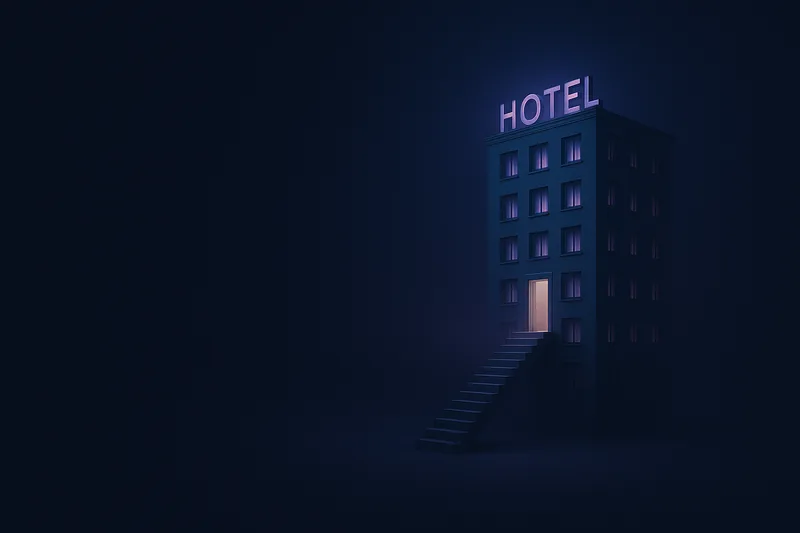
Hotel Dreams: Transitions, Temporary Selves, and The Spaces Between
Explore the hotel dream meaning with psychological, spiritual, and cultural angles. Understand transitions, identity shifts, and what your nightly layover might suggest.
Explore the hotel dream meaning with psychological, spiritual, and cultural angles. Understand transitions, identity shifts, and what your nightly layover might suggest.
Hotels in dreams have a strange pull. They are designed to mimic home, yet they are never truly ours. We borrow the bed, trust the lock, and try to rest in a room that has seen many lives pass through. That mix of comfort and distance can make a hotel dream feel intense. It can raise questions about who we are when no one knows us, and how safe we feel when we are only passing through.
If you woke with a knot in your stomach, or with a sense of relief, both make sense. Hotels often arrive when life is changing. You might be between jobs, renegotiating a relationship, or just feeling like your identity is shifting. The meaning is not fixed. A clean, quiet room can suggest a healthy pause. A maze-like hallway can reflect confusion. A crowded lobby can mirror social pressure or excitement. Context shapes the story.
Think of a hotel dream as an emotional layover. You are not stuck, but you are not at the final stop either. The dream gives you a temporary address to notice how you handle change, privacy, and the weight of your own luggage.
Dreams About Hotel: Quick Interpretation
At a glance, hotel dreams speak to transitions, temporary identities, and boundary-setting. They can highlight the need for rest, the fear of losing track of your belongings, or the thrill of feeling anonymous. Whether the hotel feels welcoming or eerie sets the tone for the message.
If you are checking in, you may be entering a new phase and testing how it fits. If you are checking out, you might be ready to move on. Lost rooms, wrong keys, or strange hallways often reflect uncertainty in your plans. Luxurious rooms can hint at aspirations and self-worth, while shabby or unsafe rooms may point to stress, burnout, or shaky boundaries.
Hotels are places of service. Who serves you in the dream, and how do you treat them? Your attitude toward staff, companions, and strangers can mirror how you relate to parts of yourself and to others when you are in transition.
- Common themes:
- Transition or limbo between life chapters
- Temporary identity, trying on a new role
- Boundaries and safety, locks, doors, and privacy
- Rest and recovery, or burnout and depletion
- Status and self-worth, luxury vs. neglect
- Social performance in public spaces, lobbies and bars
- Navigation and decision-making, elevators and hallways
- Possessions and memory, luggage and lost items
- Timing and pressure, check-in and check-out rhythms
If you only remember one thing, notice how safe and settled you felt in the hotel. That feeling usually points to the heart of the dream.
How to Read This Dream: The Three-Lens Method
A hotel dream becomes clearer when you look through three lenses. Start with emotion, then life context, then the mechanics of the dream. Each lens adds a layer of sense-making.
-
Emotional tone: What did your body feel like in the dream? Calm and sleepy? Alert and scanning for danger? Giddy with freedom? The feeling often points to what the hotel represents in your waking life.
-
Life context: Where are you between things? Are you moving, changing roles, healing from loss, or sensing a new phase? A hotel may reflect a pause in a bigger transition.
-
Dream mechanics: Notice the logistics. Could you find your room? Did the key card fail? Was the elevator stuck? These details often map to how well your plans are working and how secure your boundaries feel.
Reflective questions:
- What transition, even a small one, is active in your life right now?
- Did the dream hotel feel safe or exposed, and why?
- What was the state of the room, spotless, messy, or broken?
- Were you with friends, family, or strangers, and how did that feel?
- Did the check-in process go smoothly or get blocked?
- What floor were you on, and did you move up or down?
- Were your belongings organized, missing, or too heavy to carry?
- How did the staff treat you, and how did you respond?
- What deadline or schedule pressure showed up, like a flight or checkout?
- If the hotel felt familiar, where have you felt that feeling before in waking life?
Psychological View: Stress, Boundaries, and Identity in Transit
Modern psychology reads hotel dreams as snapshots of adjustment. When routines shift, the brain rehearses safety and structure during sleep. Hotels combine novelty with containment, which can soothe or unsettle. If your waking life feels unsettled, the dream may simulate a holding environment while your mind organizes the change.
-
Stress and recovery: Hotels can portray the line between depletion and rest. A clean bed can signal a wish to recover. Noise, broken locks, or dirty sheets may point to anxiety that rest is not possible yet.
-
Boundaries: Doors, key cards, and safes are expressive symbols. Trouble locking the door often reflects difficulty setting limits or feeling secure in a temporary role.
-
Identity: Guests try on identities. Conferences, weddings, and performances often occur in hotels. Your dream may be experimenting with who you are when no one knows your history.
-
Attachment and autonomy: Being alone in a hotel can feel freeing or lonely. With a partner or family, you may notice how responsibilities follow you even when you are away from home.
-
Memory residue: Sometimes a hotel dream simply ties to recent or planned travel. The brain sorts sensory residue and expectations. Even then, the feeling tone can be informative.
Here is a simple mapping that can help you locate a theme:
| Dream feature | Often points to | Try asking yourself |
|---|---|---|
| Lost room number | Unclear goals or roles | What decision am I avoiding clarifying? |
| Broken lock or missing key | Boundary worries, safety concerns | Where do I need a firmer yes or no? |
| Overpacked or missing luggage | Identity load, fear of losing parts of self | What am I carrying that I could lighten, or what am I afraid to lose? |
| Elevator stuck or skipping floors | Blocks in progress, stalled growth | What step would move me one level forward? |
| Noisy neighbors or thin walls | Overexposure, social overload | Where do I need quieter space or better filters? |
| Luxurious suite | Self-worth, hope, aspiration | What would letting myself rest look like this week? |
This lens is not diagnosis. It is a guide for reflection. If the dream repeats with strong fear, or if sleep becomes difficult, gentle support from a therapist can be helpful.
Archetypal and Jungian Lens, One Perspective
From a Jungian point of view, symbols gather energy around shared human patterns. This is a perspective, not a certainty. A hotel can act as a threshold space, a container between worlds, similar to the way inns function in folktales. Characters pause there, meet guides or tricksters, and choose a path.
The hotel may represent the psyche offering a temporary frame for change. The lobby is a public persona, the place where you present yourself. The hallways link different rooms of the self, and the elevator moves through levels of awareness. A locked or unknown room can be the unconscious holding something not yet ready to be integrated.
Shadow dynamics often surface in hotels. The anonymous crowd allows hidden parts of the self to appear. A noisy neighbor, a rude clerk, or an alluring stranger can personify exiled traits, needs, or fears. The dream might invite you to meet these figures with curiosity instead of avoidance, the way a traveler meets the unexpected.
Hotels also bring the motif of the guest. As a guest, you are responsible for respectful limits, yet you are free to leave. That balance can mirror individuation, slowly choosing what is yours while letting go of what is not.
In this lens, the task is not to solve the hotel, but to ask what part of your life is between floors, who greets you at the desk, and what keys you are ready to carry.
Spiritual and Symbolic Meanings
Spiritually, a hotel can symbolize a pause between chapters of meaning. It can suggest a pilgrimage in miniature, a place to rest, cleanse, and remember why you are traveling. Without claiming certainty, many people find that hotel dreams nudge them to honor transitions with care, to let small rituals mark the shift.
You might think of the room as a temporary sanctuary. Lighting a candle in waking life, journaling, or taking a silent moment before bed can turn the feeling of the dream into a steady practice. When the dream hotel feels unsafe, it may be asking for clearer spiritual boundaries, such as letting go of an energy-draining habit or creating a quiet corner in your home for reflection.
Some see the elevator or stairs as an image of ascent or descent in awareness. Moving up can feel like a wider view. Moving down can mean depth and grounding. Either direction can be meaningful.
A hotel in a dream can be a small temple of the in-between, a reminder to rest with intention while life rearranges itself.
If you are drawn to prayer or meditation, you might dedicate a brief practice to travelers and to your own inner traveler. The point is not to force a meaning, but to invite a sense of kindness toward the part of you that is carrying the bags.
Cultural and Religious Overview
Interpretations vary because cultures hold different stories about travel, hospitality, and shelter. Some traditions prize the host-guest relationship as sacred. Others see inns and roadside stops as places of testing and moral choice. Modern travel adds layers of anonymity, class markers, and global mobility.
The notes below offer common threads without claiming to represent every view within a tradition. People within the same community may disagree, and personal experience often shapes meaning as much as any text. Use these sketches to spark reflection within your own values. If something does not fit, you can let it go.
Across many traditions, hotels echo a few themes: the ethics of welcome, the responsibility of the traveler, the need for protection during passages, and the way temporary shelter mirrors inner change.
Christian and Biblical Angles
While the Bible does not describe modern hotels, it speaks often about hospitality, inns, and the care of travelers. In some stories, the road is a place where character is revealed. The parable of the Good Samaritan includes an inn where the wounded man is cared for. That image can color a hotel dream as a place of mercy and recovery.
For some Christians, a comfortable hotel room may signal God’s provision during a season of movement. A locked door that holds firm can feel like protection. A chaotic or unsafe room might reflect a need to seek refuge in faith practices, to ask for help, or to reexamine what you rely on for peace.
The ethics of being a guest can also come forward. Do you treat staff with respect? Do you care for what is not yours? The dream can highlight humility, stewardship, and gratitude during transitions.
If you are checking out with peace, you might sense readiness to move on with trust. If you are lost in endless corridors, prayerful discernment and practical planning could help. For some, placing a scripture in their travel bag or saying a brief prayer before sleep can anchor the passing-through feeling.
Common angles:
- Hospitality as a spiritual practice
- Protection and refuge during trials
- Stewardship and gratitude as a guest
- Discernment when choices feel confusing
- Care for the vulnerable traveler in yourself and others
Islamic Perspectives
Classical Islamic dream literature interprets symbols through ethical, social, and spiritual values, while acknowledging that context and the dreamer’s state matter. A hotel, like a khan or caravanserai in older settings, can point to travel, commerce, and the duties of hospitality.
If the hotel is orderly and you feel at ease, it may mirror barakah, a sense of blessing and right provision on your path. A trustworthy lock and secure belongings can reflect amanah, the trust you hold and the trust placed in you. If the room is unclean or chaotic, the dream may point to the need for purification, both practical and spiritual, perhaps a return to simple routines, prayer, and lawful means.
Because intention is central, ask what you are traveling toward. Are you pursuing beneficial knowledge, serving family, or seeking livelihood? A confusing lobby or lost room can suggest mixed intentions or unclear priorities. Straightening those can bring relief.
Some may perform du’a for ease in travel and seek lawful rest. If you see yourself helping another guest or receiving help, the dream can invite mutual care. Balance the symbolic read with your waking situation, travel plans, and emotional state.
Jewish Perspectives
Jewish tradition holds a strong value for welcoming guests, hachnasat orchim, and for caring for travelers. While modern hotels are not discussed in classical texts, the ideas of shelter, rest, and ethical conduct on the road are woven through stories and law.
A hotel dream can highlight the mitzvah of hospitality in both directions, how you receive others and how you allow yourself to be received. If the hotel is a place of Torah study or shared meals, the dream may be pointing to communal support during change. If it feels isolating, you may be craving a minyan, community presence, or routine that grounds you.
Keys and locks can symbolize boundaries that protect Shalom Bayit, peace at home, even when away. Keeping track of time for prayer in a hotel setting can appear as a theme, signaling the desire to keep sacred rhythms while traveling.
If you find your room after confusion, that moment of relief can mirror returning to core values. Simple acts, like setting a small intention before sleep or welcoming fellow travelers with kindness, can turn the hotel into a brief sanctuary.
Hindu Perspectives
In Hindu thought, life stages and transitions are part of a larger cycle. Travel images can point to karma unfolding and to dharma, the duties and integrity of one’s path. A hotel, as temporary shelter, can mirror the ashrama idea of moving through phases with appropriate focus and restraint.
If the hotel is serene and you feel light, the dream might reflect sattva, clarity and balance. A chaotic or noisy hotel can point to rajas or tamas dominating, restlessness or heaviness, inviting practices that restore harmony, such as breathwork, mantra, or simplifying routines.
You may notice how you treat staff or how you keep cleanliness in the room. These can echo ahimsa and dana, non-harm and generosity. A lost room or wrong floor can symbolize confusion about duty. Reconnecting with daily practice, even a few minutes of meditation, can steady the transition.
Some people sense that upper floors suggest higher viewpoints and lower floors suggest grounding work. Either can be valuable, depending on your life context. The dream can invite you to choose the next right step rather than chase perfection.
Buddhist Perspectives
Buddhist approaches to dreams often emphasize impermanence and the play of mind. A hotel expresses anicca clearly. It is a place you are meant to leave. Seeing your mind make a temporary home in a transient setting can be a gentle teaching.
If the hotel is pleasant, notice grasping. If it is unpleasant, notice aversion. Either way, the practice is awareness. A hallway with many doors can resemble the open possibility of mind, with habits guiding which door you reach for. Getting lost can simply show the wandering nature of attention under stress.
Compassion practices can shape the tone. Wishing safety for all guests, including yourself, can soften tightness. Placing the dream in the frame of the Eightfold Path, you might ask whether your current travel or life transition aligns with right intention and right livelihood.
If the dream repeats with anxiety, a small ritual like mindful breathing before sleep can condition a calmer mental lobby before you check in for the night.
Chinese Cultural Angles
Chinese cultural symbolism around travel and lodging touches on fortune, family duty, and social standing, while varying by region and era. A tidy, well-run hotel can suggest order and auspicious timing. Red or gold accents may be read by some as favorable. Crowded or poorly kept spaces might be taken as a warning to slow down and check plans.
Numbers can draw attention. Floors associated with certain numbers might color the feeling, based on local associations, though personal meaning matters more than general rules. What remains consistent is the emphasis on harmony, relationships, and practical preparation.
If elders appear in the hotel, you might be asked to balance personal goals with family obligations. A business-like lobby could echo career transitions. The dream may invite you to adjust pace, bow to patience, and keep relationships clear while you move.
Native American Perspectives
Indigenous traditions across North America are diverse, each with distinct teachings and symbols. There is no single Native American view on hotel dreams. That said, several communities honor dreams as meaningful and personal, often connected to place, ancestors, and the living land.
A modern hotel may appear as a stand-in for temporary shelter while traveling away from homelands or community. For some, this could raise feelings about dislocation or the need to maintain respectful conduct when you are on another’s land. The behavior of people in the dream, how you treat caretakers and how they treat you, can be part of the lesson.
If the dream includes natural signs, like animals seen through the window or weather that changes, those elements might carry more weight than the building itself. The hotel can be a container for messages about balance, responsibility to family, and staying connected to teachings during movement.
Anyone approaching these meanings from outside a community can focus on humility and listening, recognizing that specific interpretations belong within their traditions.
African Traditional Perspectives
African traditional religions and cultural practices are many and varied. Meanings differ across regions, languages, and lineages. In several contexts, travel and hospitality carry strong ethical weight. A traveler depends on the good will of hosts, and hosts earn honor by caring well.
A hotel in a dream may echo this mutual responsibility. If you are welcomed, the dream can affirm right relations and blessings in movement. If the hotel is tense or unwelcoming, it may raise questions about social harmony, obligations, or the need to consult elders or trusted guides when making plans.
Ancestors are central in many traditions. If you sense ancestral presence in the hotel space, the dream could be inviting remembrance rituals, gratitude, or attention to family stories while you navigate change. Cleanliness, offerings, or respectful conduct can all become part of the message.
These notes are broad and cannot cover the depth of any single tradition. Local practices and counsel from within your own community offer the clearest guidance.
Other Historical Angles
In ancient Greek and Roman stories, inns and waystations show up as settings for tests of character. Travelers meet gods in disguise, receive or deny hospitality, and face consequences that teach social and moral lessons. A dream hotel can borrow that stagecraft. The anonymous space becomes a theater where choices are made under time pressure.
In older Near Eastern and Mediterranean contexts, caravanserais offered shelter for merchants and pilgrims. The image of shared space for strangers suggests commerce, risk, and cooperation. If your dream hotel includes bargaining, communal meals, or guarded gates, it may carry echoes of those themes.
Medieval European tales sometimes portray inns as liminal and risky, a place where travelers must stay alert. If your hotel feels unsafe, the dream may be rehearsing how to keep wise caution during change without sinking into fear.
These historical notes do not assign fixed meanings. They offer color and pattern, showing how humans have long thought about shelter on the way from here to there.
Scenario Library: What Happened in the Hotel?
Use these scenes as mirrors, not rules. Notice which one feels closest to your dream, then adapt the questions to your life.
Safety and Threat
Pursuit in a Hotel Hallway
- Common interpretation: Being chased in a hotel often reflects trying to outrun a problem during a life transition. The hotel shows that you are between phases. The chase suggests anxiety about a deadline or an unresolved issue following you into new spaces. If doors do not open, you may feel your options are limited.
- Likely triggers:
- Pressure at work or school
- Avoided conversation in a relationship
- Travel stress or past experiences of unsafe lodging
- Media with chase scenes
- Try this reflection:
- What exactly is chasing me, in one simple sentence?
- Which door would I want to open in waking life if I could?
- Who could help me face this without running?
Attack or Threat in the Room
- Common interpretation: An intruder breaching your room can point to boundary concerns, either emotional or practical. The dream may be testing your defenses and signaling where you need a clearer no. If you fight back or call for help, it might show growing agency.
- Likely triggers:
- Feeling overexposed on social media or at work
- Family members not respecting limits
- News about safety incidents
- Sleeping in a new place
- Try this reflection:
- Where do I need a better lock in my life, literal or social?
- What early warning signs did I ignore in the dream?
- How can I practice a small, firm boundary this week?
Injury or Harm Near the Elevator
- Common interpretation: Getting hurt by a door, elevator, or stairwell can signal anxiety about moving between levels, like a promotion, deeper intimacy, or a new habit. The injury draws attention to the transition point itself.
- Likely triggers:
- Starting a new role
- Entering or leaving a relationship
- Health behavior changes
- Fear of making a mistake
- Try this reflection:
- What change am I approaching too fast or too alone?
- What support would make this step safer?
Navigation and Belongings
Lost Room Number
- Common interpretation: Forgetting your room number reflects uncertainty about where you belong in a current phase. It can show self-doubt or a need for clearer plans. Relief arrives when you ask for help or slow down.
- Likely triggers:
- Overwork and mental overload
- Juggling multiple roles
- Starting at a new school or office
- Try this reflection:
- What small list or routine would reduce confusion?
- What does belonging feel like in my body?
Missing Luggage
- Common interpretation: Lost bags often represent fear of losing identity, competence, or memories during change. If the bag is found, you may be integrating those parts. If not, the dream can invite letting go of what is no longer needed.
- Likely triggers:
- Moving house
- Changing jobs
- Sorting old photos or keepsakes
- Try this reflection:
- Which identity items feel essential right now?
- What weight am I ready to set down?
Overpacked and Exhausted
- Common interpretation: Heavy luggage and fatigue suggest over-identification with duties and expectations. The hotel appears as a place asking you to rest and simplify. You may be saying yes too often.
- Likely triggers:
- Caregiving pressures
- Perfectionism at work
- Travel with complex schedules
- Try this reflection:
- Which three items could I remove from my to-do list this week?
- What would a lighter day look like?
Social Spaces and Performance
Grand Lobby, Many People
- Common interpretation: A bustling lobby can mirror social demands, networking, or public presentation. If you feel energized, it may highlight confidence. If you feel lost, you may need better filters or a smaller circle.
- Likely triggers:
- Conferences and events
- Job interviews
- Family gatherings in unfamiliar venues
- Try this reflection:
- Which conversations give energy, which drain it?
- What is my purpose in this crowd?
Speaking at a Hotel Conference
- Common interpretation: Public speaking in a hotel can reflect a readiness to claim expertise, or fear of being judged by strangers. The hotel underscores the temporary stage. Success or glitches in microphones and slides point to communication clarity.
- Likely triggers:
- Upcoming presentation
- Performance reviews
- Social media posting
- Try this reflection:
- What is the single message I want to convey?
- What support would help me practice without pressure?
Intimacy and Care
Sharing a Room With a Partner
- Common interpretation: This scene tests how intimacy holds up away from routines. Harmony can signal secure attachment. Tension about space, temperature, or noise can reveal small grievances asking for gentle repair.
- Likely triggers:
- Planning a trip together
- Recent conflict or reunion
- Considering a bigger commitment
- Try this reflection:
- What small comfort would help us both sleep better?
- What conversation have we postponed?
Caring for a Child in a Hotel
- Common interpretation: Parenting in a hotel highlights responsibility during change. You might be protecting a younger part of yourself. Success in soothing the child suggests inner caregiving skills. Chaos may reveal overstretch and the need to ask for help.
- Likely triggers:
- Family travel
- School transitions
- Pregnancy or postpartum shifts
- Try this reflection:
- Where can I reduce stimulation for both of us?
- What predictable routine can I add tonight?
Transformation and Renewal
Upgrading to a Suite
- Common interpretation: An unexpected upgrade can symbolize a lift in self-worth, a new resource, or favor during a tough time. It invites you to receive good things without guilt while keeping gratitude.
- Likely triggers:
- Recognition at work
- Financial relief
- Support from friends
- Try this reflection:
- How do I respond to unexpected kindness?
- Where can I allow more comfort without overspending energy or money?
Renovation or Construction in the Hotel
- Common interpretation: Construction noise reflects growth in progress. It can be annoying and hopeful at once. You may be rebuilding a habit or rearranging priorities. Patience and planning become the message.
- Likely triggers:
- Therapy or coaching work
- House projects
- Organizational changes
- Try this reflection:
- What part of my life needs scaffolding rather than speed?
- What timeline would be fair to myself?
Scale and Number
Endless Floors and Elevators
- Common interpretation: Many levels suggest too many options or ambitions. If the elevator skips your floor, you may be aiming beyond your current capacity, or avoiding a realistic step.
- Likely triggers:
- Career planning
- Education choices
- Creative projects with scope creep
- Try this reflection:
- What is the next honest floor for me, not the perfect one?
- Who can help me define that?
Empty Hotel Versus Crowded Hotel
- Common interpretation: Emptiness can feel peaceful or lonely. Crowds can feel energizing or overwhelming. The contrast reveals your social needs during transition.
- Likely triggers:
- Social burnout or isolation
- Recent party or period of solitude
- Try this reflection:
- Do I need more solitude or more connection this week?
- What is one step to adjust the balance?
Place Crossovers
Hotel in Your Childhood Town
- Common interpretation: Placing a hotel in a familiar hometown setting can show you revisiting old stories with new awareness. You are not moving back, but you are pausing nearby to reflect.
- Likely triggers:
- Reunions
- Sorting family belongings
- Personal anniversaries
- Try this reflection:
- What part of my younger self is asking for rest, not a full return?
- How can I honor that without losing present momentum?
Hotel at Work or School
- Common interpretation: A hotel inside a workplace or campus suggests role overload. You are trying to rest where you also perform. The dream might be nudging you to separate recovery space from effort space.
- Likely triggers:
- Late nights in the office
- Studying in bed
- Remote work blurring boundaries
- Try this reflection:
- What small boundary would help me switch off?
- When will I plan actual rest in a different setting?
Someone Else’s Experience
Watching Someone Else Stay in a Hotel
- Common interpretation: Seeing another person in a hotel can project your thoughts about their transition. It can also mirror a part of you represented by that person. Your feelings about their stay reveal your own stance on change.
- Likely triggers:
- Concern for a friend or family member
- Comparing your path to someone else’s
- Try this reflection:
- What in their story resonates with my life right now?
- Where am I called to support, and where can I step back?
Modifiers and Nuance
Context swings the meaning. A calm, sunlit room after a long week is different from a dark, windowless chamber before exams. Pay attention to modifiers.
-
Emotions: Fear, relief, curiosity, or boredom each color the theme. Fear often points to safety or boundary issues. Relief points to recovery. Curiosity suggests growth.
-
Recurring frequency: Repeated hotel dreams during a month of change may be the mind’s way of rehearsing. If fear is strong and frequent, extra support can help.
-
Lucid or vivid quality: Lucidity can indicate readiness to make choices in waking life. A hyper-real hotel with fine detail can mean the brain is consolidating memory or stress.
-
Life contexts:
- After a breakup: Hotels may show grief’s in-between. The room can hold both loss and the first signs of freedom.
- During grief: A quiet room can be a sanctuary. Disrupted locks can reflect feeling unprotected.
- During pregnancy: Hotels often show nesting energy in a temporary container. Comfort and safety matter.
-
Colors and numbers: Note them if they feel meaningful to you. Personal associations beat general rules.
A quick way to combine modifiers:
| Modifier | If present, consider | Helps you ask |
|---|---|---|
| Strong fear | Boundary repair, safety planning | Where do I need protection or support? |
| Calm clarity | Integration and readiness | What am I ready to check out of, with gratitude? |
| Recurring weekly | Ongoing transition rehearsal | What small change reduces the stressor’s frequency? |
| Lucid control | Agency returning | Which decision can I make this week? |
| After breakup | Identity rebalancing | What comforts are mine now, not shared? |
| During pregnancy | Nesting, protection | How can I reduce overstimulation and rest more? |
Children and Teens: What Parents and Young People Can Notice
Kids and teens often dream more literally. A hotel can simply reflect a recent trip, a family move, or a show they watched. Still, the feelings inside the dream matter. A lost room can show school stress. A scary hallway can reflect social worries. For teens, hotels may symbolize independence unfolding and the push-pull of privacy versus supervision.
For parents, keep the tone calm and curious. Ask what the room felt like, not just what happened. If a child fears someone entering the room, you can turn that into a gentle talk about safety plans and bedtime routines. Avoid dismissing the dream with quick explanations. Empathy settles the nervous system.
For teens, connect the dream to current pressures. If finals, sports tryouts, or family changes are active, the hotel could be the brain’s way of building a pause. Name the stressor, plan recovery time, and keep phones out of the bedroom when possible.
Checklist for caregivers:
- Ask about feelings first, then events
- Keep bedtime predictable and screens low
- Offer a small nightlight if safety is a theme
- Normalize that dreams can feel big and still be safe
- Help them draw the room and add a lock or comfort item
- Reassure without overexplaining; listen more than you fix
Good Sign or Bad Sign?
It is tempting to treat a vivid hotel dream as an omen. That can create extra anxiety. Dreams are better used as feedback than forecasts. They show how your system is processing life. A difficult hotel scene can be a helpful signal to adjust pace or boundaries. A lavish suite can remind you to receive rest without guilt.
Use this table as a guide to tone, not fate:
| Scenario | Often experienced as | Common life theme |
|---|---|---|
| Safe check-in and tidy room | Positive, reassuring | Readiness and support during change |
| Lost keys and wrong floor | Frustrating | Planning and clarity needed |
| Intruder at the door | Scary | Boundary repair, safety habits |
| Lively lobby and warm staff | Encouraging | Social support, confidence |
| Empty echoing hotel | Mixed, peaceful or lonely | Solitude needs, recalibrating connection |
| Sudden upgrade to suite | Pleasant surprise | Self-worth, permission to rest |
Practical Integration
Turn the dream into small actions that fit your life. Start with simple journaling, then a boundary tweak, then a helpful conversation.
Journaling prompts:
- What transition am I acknowledging by staying in this symbolic hotel?
- What made the room feel safe or unsafe?
- What am I overpacking, and what can I leave behind this week?
Boundary-setting suggestions:
- Add one clear yes and one clear no to your calendar this week.
- Strengthen a physical boundary at home, a lock, a tidy entry, or a quiet corner.
- Set a digital boundary, do-not-disturb hours or fewer notifications.
Conversation prompts:
- Tell a trusted friend what the hotel felt like and what you think it represents.
- Ask for one piece of support that would make the next step easier.
- Name one fear and one hope about the transition you are in.
Next-day plan checklist:
- Note one action that brings you closer to check-in or check-out, whichever fits
- Schedule 20 minutes of true rest, no screens if possible
- Prepare a light bag for the day, carry less
- Do a quick safety check at home, doors, alarms, or routines
- Practice a two-minute breathing reset at midday
Treat the dream as a weather report, not a prophecy. It points to conditions so you can dress appropriately. Adjust your plans, pack what you need, and move with care.
Seven-Day Exercise
A small, steady practice helps hotel dreams settle into growth.
Day 1: Write the dream in present tense. Underline three feelings. Circle one object, key, bed, or bag.
Day 2: Map the hotel. Draw the lobby, elevator, and room. Note where you felt most and least safe.
Day 3: Lighten the bag. List five items, tasks or worries, you carry daily. Cross out one for three days.
Day 4: Boundary tune-up. Add one physical or digital boundary. Notice how it affects your energy.
Day 5: Ask for help. Send one message requesting a small, specific support related to your current transition.
Day 6: Rest practice. Take a 20-minute screen-free rest. If your mind races, breathe slowly and count to four on the inhale and exhale.
Day 7: Check-out ritual. Write a short note to the phase you are leaving. Thank it, then name the first step of the next phase.
Reducing Recurring Nightmares
If hotel nightmares repeat, start with gentleness. Your brain is working hard. A few practical tools can help.
-
Sleep hygiene: Keep regular bed and wake times. Reduce caffeine late in the day. Keep the bedroom dark, cool, and quiet. Move screens out of sight if possible.
-
Stress reduction: Short daily practices beat once-a-week marathons. Try five minutes of breathwork, a brief walk, or a gratitude note.
-
Imagery rehearsal: Before sleep, rewrite the dream with a safer outcome. Picture a stronger lock, a kind staff member, or finding your room easily. Rehearse the new version for a few minutes. This method is often used in clinical settings and can be adapted at home.
-
Media choices: Reduce intense shows and news before bed. Replace with calming audio or light reading.
-
Grounding techniques: If you wake afraid, orient to the room. Name five things you see. Feel your feet. Take slow breaths. Remind yourself of the date and where you are.
When to seek help: If nightmares cause significant distress, panic, or daytime impairment, a conversation with a therapist or health professional can be supportive. If trauma is part of your history, trauma-informed care can provide safety and tools tailored to you.
Frequently Asked Questions
What does it mean when you dream about a hotel?
Hotels usually point to transitions. You are between chapters and testing how safe and supported you feel. The state of the room, the ease of check-in, and the security of locks and keys all matter.
If the hotel is calm and clean, the dream may be granting you permission to rest. If it is chaotic or unsafe, it may be asking for better boundaries or clearer plans in waking life. Your own travel history can color the dream, so include that in your reflection.
What is the spiritual meaning of a hotel dream?
Spiritually, a hotel can be a small sanctuary in motion. It suggests pausing with intention, tending to your inner life while the outer life shifts. Some people treat it as a nudge to add simple rituals, like a short prayer, a candle, or a quiet journaling moment.
The direction of movement matters. If you are checking in, you may be entering a phase of learning or healing. If you are checking out, you might be ready to release something with gratitude.
What is the biblical meaning of hotel in dreams?
The Bible speaks about hospitality and the care of travelers. The inn in the Good Samaritan story has become a symbol of mercy and refuge. Applied to modern hotel dreams, that can highlight themes of protection, provision, and the ethics of how we treat others when we are guests.
If your dream hotel feels caring, you may sense support on your path. If it feels unsafe, it may be a prompt to seek refuge in faith practices and community, and to make practical safety choices.
Islamic dream meaning of hotel?
Within Islamic perspectives, temporary lodging can reflect travel, commerce, and the duties of hospitality. A well-ordered hotel may mirror blessing and trust kept. Confusing layouts or unclean rooms might invite purification and a check of intentions.
Your niyyah, intention, guides meaning. Ask what you are traveling toward and whether your priorities are clear. Du’a for ease and lawful rest can be a helpful response.
Why do I keep dreaming about a hotel over and over?
Recurring hotel dreams often show that a transition is ongoing. Your mind returns to the image to rehearse safety, choices, and boundaries. Once the stressor shifts, the dreams usually change.
Try imagery rehearsal. Before sleep, picture a safer room, a reliable key, or a helpful staff member. Make one small boundary change in waking life and see if the tone of the dream softens.
Is dreaming of a luxury hotel a good sign?
A luxury hotel can point to rising self-worth, resources, or a desire for ease. It does not guarantee a windfall. It does suggest permission to rest or to receive help.
Notice whether you feel worthy in the dream. If guilt shows up, the task may be to let yourself accept reasonable comfort without overextending.
I dreamt of a dirty, unsafe hotel room. What does that mean?
A neglected room often reflects stress, burnout, or shaky boundaries. You may feel that rest is not possible under current conditions. The dream can be asking for practical steps to restore safety and cleanliness in your routines.
Even small actions help. Tidy a corner, adjust sleep hours, and set one clear no this week. If the dream stems from past experiences of unsafe lodging, extra compassion for yourself is warranted.
What does it mean to miss my room number or lose my key card?
Forgetting a room number or losing a key suggests uncertainty about where you belong in a shifting phase. It can also flag overwork. Your brain is showing you the cost of carrying too much at once.
Simplify routines. Write things down. Ask for help at the symbolic front desk in waking life, a mentor, a friend, or a manager.
Does dreaming of a hotel mean I should travel?
Not necessarily. The dream is usually about transition and boundaries, not the literal need to book a trip. Travel plans can influence the imagery, but the core often relates to how you are handling change.
If you feel called to travel, plan with care. If not, bring the value of rest and refreshment into daily life at home.
Hotel dream meaning during pregnancy?
Pregnancy brings strong transition energy. A hotel can symbolize nesting in a temporary container, the mix of vulnerability and protection. Clean, quiet rooms point to a need for gentle rest and predictable routines.
Notice how your body felt in the dream. If anxiety is high, ask for practical help, reduce stimulation, and create a calm corner that feels like a safe room.
Hotel dream meaning after a breakup?
After a breakup, a hotel often captures the in-between. You may be grieving and also testing independence. If the room feels empty, that can be loneliness or relief, or both.
Support helps. Claims of meaning should stay flexible. Focus on sleep care, boundaries with your ex, and small rituals that protect your energy.
What if someone else dreams about a hotel, or I see it happening to them?
Seeing another person in a hotel can reflect your hopes and worries for them. It can also personify a part of you that they represent. Your emotional reaction is the best clue.
Ask what you admire or fear for that person. Then translate it to your own life. Where do you need support or boundaries in a similar way?
Is dreaming of a hotel a bad omen?
No. It is usually a snapshot of change being processed. If the tone is dark, treat it as a request to adjust safety and pacing rather than as a threat.
Notice what would make the room safer. Then do one small version of that in waking life. This approach keeps dreams useful and grounded.
What should I do after a hotel dream?
Write down the main feeling and one image, like a key, bed, or elevator. Decide on one small action that improves rest or boundaries. Share the dream with someone supportive if that feels helpful.
If the dream felt hopeful, protect that feeling by scheduling a simple comfort or by saying yes to a modest upgrade in your day.
Why do hotel elevators and hallways show up so much?
They are transit images inside a transit place. Elevators and hallways map to progress, choices, and levels of awareness. If they are broken or confusing, you may be pushing too fast or skipping steps.
Choose the next honest floor. Make one decision and test it. Clarity grows with action.
Does the floor number matter in a hotel dream?
It can, but personal meaning beats general rules. If you like high views, higher floors may feel freeing. If you fear heights, they may show anxiety. Some people attach cultural meanings to numbers, which can color the tone.
Ask how the floor felt in your body. That feeling gives a better guide than any fixed list.
Why was the lobby so crowded in my dream?
A crowded lobby often mirrors social demand. You may be managing public roles, networking, or family expectations. If it felt positive, you might be ready for visibility. If it felt draining, you may need to filter invitations.
Plan a smaller circle for important conversations. Protect downtime after big social moments.
I got a free upgrade in the dream. Is that a sign of luck?
An upgrade usually signals permission to receive help, recognition, or comfort. It feels lucky, but the deeper message is about worth and openness to support.
Say yes to reasonable improvements in your day, like asking for clearer instructions, better tools, or a tidy workspace.
I could not find my way back to the hotel room. What should I do?
Feeling lost points to overload or unclear goals. In waking life, reduce complexity. Make a short list, ask for guidance, and take one step at a time.
Before sleep, picture finding the door easily. Imagery rehearsal can teach your mind a calmer route.
Is a hotel dream different for business travel versus vacations?
Yes. Business themes highlight performance and networking. Vacation themes highlight rest and pleasure. Your dream will often mirror whichever is active, or show the tension between them.
If business energy intrudes on a vacation scene, the message may be to build better off-switches. If vacation energy appears in a work hotel, your system may be asking for recovery time.