

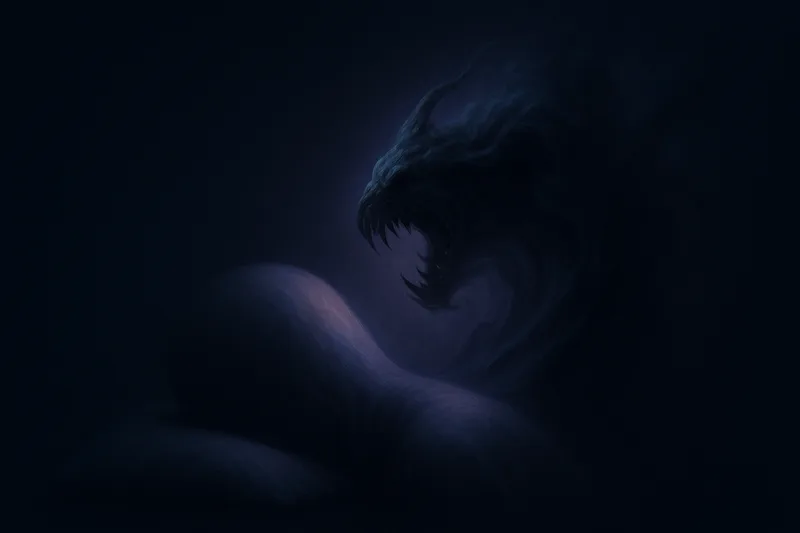
Monster in Dreams: How to Read the Fear, the Power, and the Invitation to Change
A thoughtful guide to the monster dream meaning. Understand psychological, spiritual, and cultural angles, with practical steps to integrate what your dream shows.
A thoughtful guide to the monster dream meaning. Understand psychological, spiritual, and cultural angles, with practical steps to integrate what your dream shows.
A monster on the screen can frighten you for a moment. A monster in a dream can leave a trace that lingers through breakfast and into the day. It has weight, breath, smell, and the kind of presence that is hard to shake. Many people wake from these dreams with a pounding heart and a quick scan of the room, just to be sure. That reaction is normal. Your nervous system does not neatly separate imagined threat from perceived threat while you sleep.
Monster dreams thrive on exaggeration. They combine pieces of stress, memory, and imagination, then turn the dial to maximum so the message gets through. Sometimes the message is simple, like you are stretched too thin. Sometimes it is deep, like you are back in an old role or facing a part of yourself you would rather not see. Either way, the image works because it is larger than life.
There is no single meaning for a monster. Context drives meaning. Who is with you, what the creature looks like, where it appears, and how you feel during and after the dream all matter. A monster in your childhood home is not the same as a monster under your work desk. Fighting a monster differs from bargaining with it. The same creature that terrifies one dreamer could be a protective force for another.
This guide will help you read the symbol from several angles. You will find psychological framing, archetypal ideas, spiritual possibilities, and cultural lenses. You will also find practical steps. Treat this as an invitation to observe with care rather than a set of fixed answers. What matters most is how the dream lands in your body and your life.
Dreams About Monster: Quick Interpretation
When you dream of a monster, your mind may be giving shape to something that feels too intense or too vague to face directly when awake. This can be external, like a difficult boss, a tense family situation, or a medical worry. It can be internal, like anger you swallow, grief you have postponed, or a side of you that feels unruly.
The monster can also point to energy, not just threat. Some dreams show a monster that looks terrifying but holds power you actually need. Courage, instinct, sexuality, creativity, and assertiveness sometimes arrive in monstrous costumes when those forces have been sidelined.
Context clues help: the setting, your response, whether the creature speaks, and whether the danger is real or symbolic. Many dreamers find that once they name the current stress or unowned energy, the dream relaxes over time.
Most common themes:
- External stress magnified into a creature
- Internal conflict or disowned traits
- Boundary problems, including people or tasks that overrun your time and energy
- Fear of change, especially transitions that feel bigger than your current tools
- Childhood anxiety resurfacing under adult pressure
- Grief or trauma residue that needs safe support
- Testing courage, agency, or problem-solving under pressure
- Protection and warning, like an inner alarm that needs attention
- Transformation, where the monster shifts into an ally after engagement
If you only remember one thing, remember this: a monster dream is less about monsters and more about a feeling or force that needs a face so you can work with it.
How to Read This Dream: A Three-Lens Method
Try this simple method to turn a frightening image into something usable. Move through three lenses, and let them cross-check one another.
Lens A, emotional tone: What did your body feel in the dream and upon waking? Terror, disgust, fascination, relief, anger, or a strange calm can all appear. The feeling often points toward the area of life that is active right now.
Lens B, life context: What is currently unstable or demanding? Sleep often processes leftover stress. New roles, medical tests, money pressure, family changes, school deadlines, and the churn of news can all leak into a nightmare. Often the monster stands in for several pressures at once.
Lens C, dream mechanics: How did the dream unfold? Did you run, freeze, negotiate, or fight? Did the monster break a door, shape-shift, speak, or wither in light? Small mechanics carry meaning. The dream may be modeling a response, testing a limit, or exaggerating a stuck point.
Helpful questions:
- What is the single most intense moment of the dream, and what life situation feels most similar to that intensity?
- Did you have any power or tools in the dream that you overlooked at the time?
- If the monster had a sentence to say about your current week, what would it be?
- Where did the dream occur, and what does that place mean to you today?
- Did the monster protect anyone or anything, and does that echo a boundary you need?
- Are you avoiding a conversation, task, or choice that grows larger the longer you wait?
- If the monster is part of you, what quality might it carry that you lack or reject?
- If the monster is external, who or what in your life feels unpredictable, unfair, or overpowering?
- How did the dream end, and does that mirror how you usually end stressful situations?
- What would a small, kind action today look like if you took the dream seriously but not literally?
Psychology: Stress Signals, Boundaries, and the Body
From a modern psychological view, monster dreams are one way the brain organizes emotional overload. During rapid eye movement sleep, emotional memory processing is active, and images get bold. The brain does not aim for accuracy. It aims for salience. That is why the creature is larger than life, why the hallway is longer than it should be, and why your legs may feel heavy when you try to run. Your body state is part of the message.
Monster dreams often arise when you are facing a demand that outstrips your current resources. You might be juggling caregiving, deadlines, or uncertainty. The mind groups these pressures into a single adversary. That adversary feels personal because it is stitched from your own experiences and fears.
Avoidance patterns also fuel these dreams. When anger, grief, shame, or desire is pushed aside, the feeling can leak in at night as a creature that chases you. Not because you are doing something wrong, but because feelings want movement. If they cannot move in daylight, they try to move in sleep.
Common psychological themes include:
- Boundary strain: saying yes when you need to say no, leading to a monster that barges into your house or room
- Identity stress: a creature that steals your voice or changes your shape, hinting at role confusion or burnout
- Attachment and trust: a monster that tests whether anyone will help you, pointing to isolation or fear of relying on others
- Change and transition: a shape-shifting beast that mirrors life conditions in flux
- Memory residue: recent media, games, or news providing texture for the dream without defining its meaning
Here is a small mapping table you can use while journaling:
| Dream feature | Often points to | Try asking yourself |
|---|---|---|
| Monster in your home | Boundary issues, safety needs | Where do I need a firmer no or clearer support? |
| Chasing but never catching | Avoidance cycle, unfinished task | What am I postponing that grows heavier by the day? |
| Frozen or slow legs | Stress overload, helplessness | What practical help or rest would lighten the load? |
| Monster speaks calmly | Unheard message, inner wisdom in scary form | What direct sentence might this creature be saying? |
| You fight and win | Agency returning, problem-solving | Where did I recently take a stand that helped? |
| You befriend the monster | Integration of disowned traits | What part of me needs a place at the table? |
Archetypal and Jungian Lens: The Shadow and the Creative Monster
This is one perspective among several. Within a Jungian frame, monsters carry the charge of archetypes, condensed patterns of human experience that show up across stories. The monster is often linked to the shadow, a word that points to traits we find unacceptable or dangerous in ourselves and therefore push out of awareness. The more we exile a quality, the more distorted it can appear in dreams.
A monster may arrive to spotlight a quality that needs integration. Maybe it embodies aggression that could become healthy assertiveness. Maybe it carries raw energy that could power creativity if it were not locked outside. Sometimes it stands for a protective instinct that has been undercut by politeness or fear of conflict. When the dreamer turns to face the creature, the image can shift. Teeth might soften, size might shrink, or the monster might become a guide.
The setting matters here as well. A monster in a cave can read as descent into the unconscious, a meeting with older layers of the self. A monster in a city street can point to social roles, public image, or the feeling of being consumed by the collective. If the monster guards a door or treasure, the image hints at initiation. Crossing a threshold often requires encounter with the fear that stands at the doorway.
This lens is not mystical certainty. It is a language for inner patterns. Use it if it resonates, and pair it with your lived context.
Spiritual and Symbolic Meanings: Meeting the Threshold Guardian
Many spiritual readers view monsters as threshold figures. They show up when your life asks you to shed a skin or step into a wider space. The form looks frightening because change can be frightening. If you see the monster as a teacher, the lesson may be about courage, humility, truth-telling, or patience. If you see it as a mirror, the lesson may be about excess, like appetite, ego, or control.
Some people sense a protective meaning. The monster refuses entry to a place you are not ready to go. Or it warns about a situation that requires caution. Others experience the creature as misunderstood, like a powerful animal that needs direction. In either case, ritual steps can help: naming the fear, lighting a candle, writing a letter to the creature, or asking for guidance in prayer or meditation.
A useful stance is to respect the power without bowing to terror. Listen, ask what it wants, and decide what small act would honor the message without giving away your agency.
Symbolically, meeting a monster can mark a rite of passage. It might be time to stand up for yourself, to confess a truth, or to accept help you have avoided. What matters is the alignment of meaning with your values.
Cultural and Religious Overview: Many Stories, Many Meanings
Cultures shape monsters from their fears, hopes, and moral codes. What horrifies in one tradition may look protective or lucky in another. Some stories warn against pride or greed using monstrous images. Others depict sacred guardians that test the heart of a seeker.
No single tradition speaks for all believers, and communities vary within each faith. What follows are broad themes gathered respectfully. Treat them as lenses, not rules. The purpose is not to flatten diverse teachings, but to help you connect your dream with the stories that live in your family and culture. If your background carries a specific teaching, weigh it more strongly than any general summary.
As you read, ask: which images feel familiar, and which do not? Your dream may echo a story you heard as a child, or it may create a new image that invites personal reflection.
Christian and Biblical Lenses
Within Christian contexts, monstrous figures can represent chaos, sin, or powers that oppose God's order. Biblical texts use beastly imagery in prophetic and poetic books to speak about oppressive empires, moral disorder, or cosmic struggle. Many Christians view such symbols as pointing to both external forces and inner temptations.
Dreaming of a monster may stir questions about discernment. What in your life feels tempting or corrosive to your commitments? What needs prayer, counsel, or confession? Some people find that invoking protection, such as a short prayer before sleep, calms repeated nightmares.
Context shifts the tone. A monster in a church might raise questions about spiritual hypocrisy or fear of judgment. A monster in the wilderness can echo testing or preparation. If you confront the creature with a sense of faith and it retreats, the dream may reflect trust gaining ground over anxiety. If you hide while others confront it, the dream might point to passivity in the face of challenges.
Common angles:
- Monsters as images of temptation, fear, or pride
- Testing of faith or courage in the face of chaos
- Protection and deliverance themes, such as calling on God for help
- Humility, acknowledging human limits and seeking support from community
Some Christians prefer to treat such dreams as prompts for prayer, self-examination, and practical steps. Others turn to pastoral guidance. The focus is not prediction, but the alignment of life with values.
Islamic Perspectives
Within Islamic thought, dreams are often considered in categories, including dreams from God, from the self, and from unsettling whispers. Interpretations vary widely across communities. Unsettling images can be seen as reflections of anxiety or as images that call for remembrance of God and ethical steadiness.
A monster may be read as a sign to seek refuge, increase remembrance, or take practical steps to reduce harm. Many people find comfort in reciting protective verses before sleep, maintaining cleanliness, and avoiding heavy or disturbing media late at night. If a dream causes distress, some traditions suggest breathing to the left lightly or changing sleep posture.
Context matters. If the monster threatens loved ones, the dream may press on responsibilities and care. If the monster is in your workplace, it may echo concerns about fairness or livelihood. If you resist the monster with calm, the dream can reflect patience and reliance on God. If you feel paralyzed, it can point to the need for support, counsel, or concrete planning.
Common angles:
- A call to remembrance and reliance on God during stress
- A mirror of personal fears that asks for patience and wise action
- Ethical questions about power, fairness, and responsibility
- Practical protections, like prayer routines and grounded daily habits
Many Muslims approach such dreams with humility, seeking meaning without assuming certainty, and translating any insight into balanced action.
Jewish Perspectives
Jewish thought holds a rich mix of interpretations about dreams, from skeptical to receptive. Traditional sources sometimes treat unsettling dreams as calls for reflection, restraint, or prayer. In many communities, dreams are not seen as fixed messages, but as opportunities to weigh life choices and emotions.
A monster can symbolize the yetzer hara, the inclination that can lead one into harmful choices if left unexamined. It can also embody fear during times of uncertainty. The response is often practical and ethical. Examine your week: where have you cut corners, avoided a duty, or carried secret worry? What small repair is available today?
Setting changes meaning. A monster near your home may point to family obligations or boundary strain. A monster that you debate or outwit can reflect the value of study, discussion, and wise counsel. If the creature shrinks as you face it, the dream may be modeling teshuvah, a return to better alignment.
Common angles:
- Ethical reflection and repair, small steps toward alignment
- Community support, study, and conversation as tools for fear
- Respect for dreams without treating them as binding instructions
- Humor and humility, since laughter can sometimes shrink fear
Hindu Perspectives
Hindu traditions span a wide range of stories where demons and fierce beings appear as both challengers and protectors. Some deities carry fierce forms that cut through ignorance and illusion. In that context, a monster can be read as either an obstacle born of attachment or as a form that teaches through intensity.
If the dream shows you running, it might reflect aversion to a needed lesson. If the monster watches rather than attacks, you may be asked to see through fear and act with steadiness. If the creature transforms into a guide, the dream may be signaling that energy once labeled bad can serve if aligned with dharma.
Ritual practices like mantra, meditation, and offerings can help frame the experience. Some people find it helpful to ask inwardly, what quality does this being carry that I need? Courage, focus, restraint, or compassion can all appear in fierce clothing. Others treat the dream as a prompt to simplify life and reduce excess.
Common angles:
- Fierce forms as teachers as well as threats
- Transformation of untamed energy into disciplined action
- Seeing through fear to right conduct
- Practical purification, like cleaning, ordering, or mindful diet
Buddhist Perspectives
Many Buddhist teachings view frightening images as mind-made phenomena that can be met with awareness and compassion. Monsters may represent kleshas, mental states like greed, hatred, and delusion that cloud clarity. They can also point to fear of impermanence or clinging to identity.
In practice, the invitation is to observe without panic. Some meditators visualize offering compassion to the monster, or even seeing it dissolve when looked at clearly. This is not passivity. It is a training in seeing reactivity and choosing wise action rather than automatic struggle.
If the monster chases you, the dream may be showing how avoidance strengthens fear. If you stop and breathe, the image might change. If you act with clarity and kindness, even internally, the monster often loses force. Daily life steps could include mindful breaks, honest speech, and restraint in media consumption.
Common angles:
- Meeting fear with mindfulness and compassion
- Seeing the constructed nature of scary images
- Reducing reactivity through small, steady practice
- Ethics as the backbone that keeps fear in perspective
Chinese Cultural Perspectives
Chinese cultural views on monsters weave folklore, moral teaching, and family values. Some stories feature spirits or beasts that test sincerity and filial duty. Others include guardian creatures that frighten off harmful forces. The same image can be ominous or auspicious depending on behavior and context.
A dream monster that breaks into a home could highlight disharmony, gossip, or conflict that needs repair. A monster that guards a gate might be read as a protective force that asks for respect and proper conduct. If the monster is linked with water, it may carry emotions and unpredictability. If it appears around festivals or ancestral spaces, it may connect with memory and family obligations.
Practical responses often include tidying the space, honoring elders, reconciling disputes, and keeping a balanced routine. Symbolic acts like placing protective images or lighting incense can bring calm for those who value those practices.
Common angles:
- Harmony and duty as stabilizers in the face of fear
- Respect for protective forces and household order
- Repairing relationships to quiet inner disturbance
- Grounding through routine, cleanliness, and balanced diet
Native American Perspectives
Native American traditions are diverse, with distinct languages, teachings, and practices across hundreds of Nations and communities. Any single summary will miss important differences. That said, many stories across various traditions treat powerful beings with respect, whether they appear as animal spirits, guardians, or tricksters.
In some communities, a frightening figure may be approached through ceremony, prayer, or consultation with a knowledgeable elder. The meaning can depend on the form of the being, the land where it appears, and the dreamer’s relationship to community and ancestors. A fearful encounter might ask for protection, honesty, or a course correction in behavior. A powerful protector might feel frightening at first because it is unfamiliar.
Context again matters. If the being appears in a place tied to your family or territory, the dream might carry messages about responsibility to land or kin. If you are not part of a specific tradition, approaching the image with humility and without appropriation is respectful. The core takeaway is to listen and act with care, guided by your own heritage and relationships.
Common angles:
- Respect for powerful beings and the land
- Seeking guidance from elders and community when appropriate
- Aligning personal choices with responsibilities and values
- Avoiding appropriation and honoring boundaries
African Traditional Perspectives
Across the African continent, traditional beliefs and practices vary widely from region to region and from community to community. Some traditions hold that dreams connect the living with ancestors or spirit forces. Frightening beings can be seen as warnings, tests, or messages that ask for realignment with community values.
A monster might highlight disharmony, unresolved conflict, or neglected obligations. Protective spirits can also appear fearsome, especially when boundaries have been crossed. Responses may include prayer, offerings, or counsel from a respected person in the community. The focus is less on spectacle and more on restoring balance.
Urban life, migration, and modern pressures often blend with these older frames. A monster in an office building might speak to dignity and fairness at work. A monster that threatens family gatherings can reflect tension among relatives or financial strain. In every case, the tone of the dream and the recognized symbols in your own upbringing shape meaning.
Common angles:
- Restoring balance and repairing relationships
- Respecting ancestors and community guidance
- Recognizing protective forces that may appear fierce
- Practical responsibility alongside spiritual care
Other Historical Lenses: Greek, Mesopotamian, and Egyptian Echoes
Ancient stories often use monsters to dramatize the tension between order and chaos. In Greek myths, heroes face creatures that test courage and intelligence. These beings mark thresholds. Defeating or outwitting them signals growth into a new role. Many of these tales see the monster as a stand-in for a psychological task, even if that language was not used at the time.
In Mesopotamian narratives, sea and storm deities battle chaotic forces. The image of a creature from the deep shows how unsettling the unknown can feel. Dreams that show watery monsters can echo the fear of being overwhelmed by emotions or events.
In Egyptian imagery, hybrid beings guard gates. Some are fierce protectors who ensure proper passage, especially in afterlife texts. Meeting a fearsome guardian might ask for truthfulness and right conduct. In dreams today, these echoes can appear when your life requires honesty and integrity to pass through a difficult stage.
These historical frames remind us that monsters are not new. Every era makes them from its fears and uses them to teach.
Scenario Library: Reading Specific Monster Dreams
Use this library to connect common storylines with practical reflection. Treat each interpretation as a possibility, then weigh it against your life.
Pursuit and Chase
- Monster chasing you through streets
Common interpretation: This often points to avoidance. The mind translates an unresolved task, conversation, or decision into a chase. The city setting can add social pressure, public image, or work stress. Not being caught can mean you are keeping distance without resolution.
Likely triggers:
- Procrastination on a hard task
- Fear of public failure
- Conflict you want to avoid
- Overuse of stimulants or late-night media
Try this reflection:
- What single step would reduce the pressure by 10 percent?
- Who could help you rehearse a difficult conversation?
- What is the cost of delay compared to the cost of action?
- How does your body react when you picture turning around?
- Monster chasing but in slow motion
Common interpretation: The body often feels heavy in REM sleep. Psychologically, the slow pace can mirror helplessness or depletion. You may be trying to move forward in life without enough rest or support.
Likely triggers:
- Burnout or illness
- Too many responsibilities
- Depression symptoms
- Low sleep quality
Try this reflection:
- What can be paused or delegated this week?
- What rest would be restorative, not just numbing?
- Who needs to know that you are at capacity?
Attack and Threat
- Monster breaks into your house
Common interpretation: Boundaries are under strain. Your home is your inner life. A break-in can reflect people, tasks, or thoughts intruding past your limits. If the door was unlocked, the dream may nudge you to firm up routines or say no more clearly.
Likely triggers:
- Overcommitment
- Family demands that feel relentless
- Work entering home life without limits
- Social media overload
Try this reflection:
- Where can you set a clear boundary in the next 48 hours?
- What do you need to feel at home in your own space again?
- What conversations will support this boundary?
- Monster attacks a loved one while you watch
Common interpretation: Helplessness and fear for others. The dream may dramatize worry about someone’s health, choices, or safety. It can also highlight guilt about not doing enough.
Likely triggers:
- Caregiving strain
- Parenting stress
- News about a friend’s crisis
- Vicarious trauma from media
Try this reflection:
- What help is actually yours to give, and what is beyond your control?
- How can you support without burning out?
- Is there a direct check-in you have avoided?
Injury, Bite, or Harm
- Monster bites you but you do not bleed
Common interpretation: The threat feels intense, but the damage may be less than feared. Your system might be overestimating danger, or you might be more resilient than you think.
Likely triggers:
- Anticipatory anxiety
- Waiting for results or feedback
- Rumination habits
Try this reflection:
- What evidence supports danger, and what challenges it?
- What would a grounded plan B look like?
- How could you reduce rumination before bed?
- Monster poisons you
Common interpretation: Something feels toxic. This can be literal, like food or substance concerns, or metaphorical, like gossip, resentment, or a draining environment.
Likely triggers:
- Office politics
- Family conflict
- Substance overuse
- Poor air or sleep environment
Try this reflection:
- What is one thing you can stop taking in this week?
- What fresh input would help you feel cleaner or clearer?
- Who could help you shift a toxic pattern?
Overcoming, Escape, and Alliance
- You kill the monster
Common interpretation: Taking back agency. The dream may reflect a decision or action that reduces fear. Killing is symbolic, not prescriptive. It points to cutting off the power source of a problem.
Likely triggers:
- Setting a boundary
- Ending a draining commitment
- Winning a negotiation or standing up to unfairness
Try this reflection:
- What power did you use in the dream, and how can you use it fairly in life?
- What could regrow if you are not careful, and how will you keep watch?
- You escape by outsmarting the monster
Common interpretation: Strategy over force. Your mind is modeling the use of wit, planning, or collaboration. You might be learning to navigate a system rather than confronting it head-on.
Likely triggers:
- New job or school challenges
- Bureaucracy or paperwork
- Complex family dynamics
Try this reflection:
- Who has the map you need, and how can you learn from them?
- What rule or pattern, once understood, would make life easier?
- You befriend the monster
Common interpretation: Integration. The dream suggests that the disowned quality needs a role. Anger could become protection. Boldness could become leadership. The creature becomes less frightening when given a task.
Likely triggers:
- Therapy or self-development
- Practicing assertiveness
- Learning to say no without apology
Try this reflection:
- What talent or emotion have you labeled bad that might serve if guided?
- What small, safe way could you practice this quality tomorrow?
Transformation and Renewal
- You transform into the monster
Common interpretation: Identity shift, fear of becoming what you dislike, or recognition of hidden power. If you cause harm in the dream, guilt or fear of your own intensity may be active. If you gain strength and clarity, untapped potential might be knocking.
Likely triggers:
- New authority role
- Parenting and the use of power
- Anger management work
Try this reflection:
- What do you fear becoming, and what values will guard against it?
- Where do you need more strength, and how can you use it responsibly?
- Monster turns into a child or animal
Common interpretation: The fear softens when seen clearly. A vulnerable part of you may need care, not combat. The dream may invite tenderness toward an old hurt.
Likely triggers:
- Grief work
- Revisiting childhood memories
- Gentle caregiving roles
Try this reflection:
- What part of you feels small and in need of protection?
- How can you respond with patience instead of judgment?
Number, Size, and Setting
- Many small monsters
Common interpretation: Too many small stressors rather than one large threat. Death by a thousand cuts. The solution is often pruning and routine.
Likely triggers:
- Over-scheduling
- Notifications and digital overload
- Family logistics
Try this reflection:
- What three tasks can you drop or defer this week?
- How can you reduce digital interruptions?
- One giant monster
Common interpretation: A single big issue dominates. The dream calls for focused attention and perhaps outside help.
Likely triggers:
- Major life decision
- Health concern
- Financial threat
Try this reflection:
- What is the central problem and what is everything else?
- Who are the two people you need on your team for this?
- Monster in your bed or bedroom
Common interpretation: The most intimate space is invaded. Sleep quality, sex, safety, or privacy may be on your mind. It can also reflect nighttime anxiety, sleep paralysis episodes, or media intake before bed.
Likely triggers:
- Insomnia or irregular schedule
- Relationship tension
- Scary media at night
Try this reflection:
- What boundary or ritual would guard your sleep window?
- What conversation about intimacy or privacy is overdue?
- Monster at work or school
Common interpretation: Performance pressure, evaluation fears, or difficult dynamics. The dream often points to preparation and support rather than perfection.
Likely triggers:
- Exams, presentations
- New manager or policy
- Peer conflict
Try this reflection:
- What is the smallest step that would improve readiness?
- Who can give feedback before the high-stakes moment?
- Monster in water
Common interpretation: Emotions rising. Water carries moods and memory. A submerged creature can reflect feelings you have not named or a situation that lacks solid ground.
Likely triggers:
- Grief or heartbreak
- Hormonal shifts
- Seasonal mood changes
Try this reflection:
- What emotion are you least willing to admit right now?
- What container, like a therapy hour or a long walk, could hold it?
Others and Witnessing
- Someone else is chased by the monster
Common interpretation: Empathy or projection. The person in the dream may represent a part of you or may be the actual person. Either way, the dream shows concern about their struggle or about your identification with that role.
Likely triggers:
- Worry for a friend or child
- Watching someone repeat a painful pattern
- Boundaries around helping
Try this reflection:
- What help is helpful, and what is overreach?
- Does this person mirror a part of you asking for care?
- A crowd ignores the monster while you panic
Common interpretation: Feeling alone in your perception. You may see a risk or problem others downplay. This can reflect both accurate perception and anxious sensitivity. The task is to test your assessment.
Likely triggers:
- Workplace culture that normalizes overload
- Family that avoids conflict
- Early experiences of not being believed
Try this reflection:
- Who can reality-check with you objectively?
- What data would clarify the level of risk?
- You communicate with the monster
Common interpretation: Dialogue opens a path. The dream is modeling negotiation with fear. Sometimes the creature has a demand that is actually wise, like rest, honesty, or space.
Likely triggers:
- Therapy or coaching
- Learning to name needs
- Conflict resolution work
Try this reflection:
- If the monster asked for one fair thing, what would it be?
- What would a reasonable compromise look like?
- Childhood home with lurking monster
Common interpretation: Old patterns revisited under current stress. The dream may be stitching today’s pressure to early adaptations. Not a regression, but a reminder that old scripts still run when you are tired.
Likely triggers:
- Holidays or family contact
- Milestones that echo childhood roles
- Parenting your own child
Try this reflection:
- What old role did you step into in the last week?
- What adult skill can you use now that you did not have then?
Modifiers and Nuance
How you felt in the dream often matters more than the creature’s design. Panic points to overload. Anger points to boundaries. Curiosity points to growth. A recurring dream suggests an unresolved theme, not a fixed fate. Lucid moments, where you know you are dreaming, can turn fear into learning.
Life context shifts interpretation. After a breakup, a monster may show grief, jealousy, or fear of abandonment. During pregnancy, monster dreams can reflect protective instincts, body changes, or anxiety about safety. During grief, the monster can stand for the enormity of loss. During a big work push, the monster may simply be an amalgam of deadlines and demands.
Color and number sometimes add texture. Red can mark anger or urgency. Blue can mark sadness or calm. Many small creatures can point to scattered stress. One giant figure can point to a single main issue. These are not rules, just helpful handles.
Use this table to blend modifiers:
| Modifier | If present, consider | How it can shift meaning |
|---|---|---|
| Dominant emotion is anger | Boundary violations, assertiveness skills | The monster may invite a firmer stance, not flight |
| Recurs weekly | An unresolved stressor or habit | Track triggers and test small changes |
| Lucid moment occurs | Agency and learning | Try negotiating or asking a question in-dream |
| After breakup | Attachment wounds, self-worth | The monster may carry jealousy or fear of being replaced |
| During pregnancy | Protection, body changes, nesting | The monster may be a guardian or a symbol of vigilance |
| During grief | Overwhelm, longing, unfinished goodbyes | The monster can be the size of the loss itself |
| Vivid colors or sound | Heightened arousal or media residue | Reduce stimulation before bed to see if tone eases |
Children and Teens: What Helps, What Hurts
Children meet monsters early. Developmental anxiety mixes with media images and real-life stress. For younger kids, monsters are often literal. A scary cartoon can appear at night as a towering figure. For teens, monsters may evolve into social threats, like a faceless bully or a shapeless crowd.
For parents and caregivers, the goal is calm presence, not perfect explanations. Validate the fear, then shift into supportive action. Simple routines help: a night light, a predictable bedtime, and a short, steady check-in. Avoid arguing with the feeling. Instead, name it. When a child feels seen, the nervous system settles.
Teens benefit from collaboration. Ask what would help the most, and involve them in making the plan. Emphasize media hygiene. Late-night horror or intense gaming can seed vivid nightmares. That does not mean blame. It means skillful timing and balance. School stress also looms large. Nightmares often track exam periods, social conflict, or team pressures.
If nightmares are frequent, intense, or tied to trauma, consider professional support. Care can be gentle and focused on safety. Do not pressure a child to tell details if they are not ready. Aim for trust first.
Checklist for caregivers:
- Validate the fear without minimizing it
- Ask the child to draw or describe the monster and give it a silly or small detail
- Adjust bedtime routine to include a calm story and predictable lights-out
- Reduce intense media in the hour before sleep
- Offer a comfort object and a simple protection ritual
- Reassure that you will check in, then keep that promise
Good or Bad Sign?
It is tempting to treat a monster dream like an omen. The mind wants certainty when afraid. In practice, these dreams tend to be emotional weather reports. They measure pressure, not destiny. A scary image can lead to good outcomes if it pushes you to set a boundary, seek support, or rest. A heroic victory can be a warning if it feeds denial about a real risk.
Use this table as a guide to tone without falling into superstition:
| Scenario | Often experienced as | Common life theme |
|---|---|---|
| Being chased in a maze | Anxiety and indecision | Avoidance cycle, need for a simple next step |
| Fighting with help from friends | Relief and solidarity | Community and teamwork matter now |
| Monster in the bedroom | Vulnerability, intrusion | Sleep hygiene, intimacy, privacy |
| Monster becomes smaller | Hope and agency returning | Naming the problem reduces fear |
| Crowd ignores the monster | Isolation, frustration | Advocacy, finding allies and data |
| You transform into the monster | Alarm or empowerment | Power, identity, and responsibility |
Treat meaning as a working hypothesis. If the dream leads to one useful change, it has served its purpose.
Practical Integration: From Nightmare to Next Step
Start simple. Write down three details: what the monster looked like, where it appeared, and what you felt. Then connect those to one area of life. If you cannot name the area, list the top three stressors this week and circle the one that matches the dream’s feeling.
Journaling prompts:
- If the monster had a job title, what would it be, and what department of your life would it work in?
- What would the monster respect: strength, honesty, slowness, precision, or help?
- If you negotiated with the monster, what fair terms would you propose?
- Who, among people you trust, would make a good ally in handling the issue it represents?
Boundary-setting suggestions:
- Decide on one polite no you will say this week
- Move one distracting app off your home screen for seven days
- Put a time box around a stressful task and stop when the timer ends
- Ask for help before you are desperate
Conversation starters:
- I had a dream about a monster. It felt like a picture of how overwhelmed I am by X. Can we plan for Y?
- I keep feeling intruded upon in my own space. Let’s set some room rules that support both of us.
- I am noticing I snap when I am tired. I want to practice a pause and name what I need.
Next-day plan checklist:
- Drink water, stretch, and step outside for two minutes
- Capture the dream in a sentence in your journal
- Choose one supportive action that takes under 15 minutes
- Send one message asking for help or setting a boundary
- Reduce stimulating media for the rest of the day
- Schedule real rest for tonight
Treat the dream as feedback, not fate. Pick one small behavior that honors the message. If the monster screamed about overload, cancel something small. If it pushed you toward courage, make one honest request. Tiny moves change the map.
Seven-Day Exercise: Rewriting the Pattern
Day 1, Capture and Context: Write the dream in five sentences. Underline the strongest emotion. List the three biggest stressors this week. Draw one line connecting the dream to a stressor.
Day 2, Body and Breath: Before bed, try a three-minute breath practice. Inhale for four, exhale for six, repeat. Place one hand on your chest and one on your belly. Tell your body, you are safe enough to sleep.
Day 3, Boundary Micro-step: Say one no, cancel one nonessential task, or time-box one chore. Note how your body feels afterward.
Day 4, Dialogue on Paper: Write a short script where you ask the monster what it wants. Answer as the monster. Keep it brief and specific. End with one fair request you will test tomorrow.
Day 5, Support and Skill: Share the dream with a trusted person. Ask for either encouragement or practical help, not both. Practice one skill for ten minutes, like assertive phrasing or mindful walking.
Day 6, Imagery Rehearsal: Rewrite the ending of the dream so that you solve the problem or ask for help. Picture the new ending for two minutes before bed. Keep the tone calm.
Day 7, Review and Adjust: Note any changes in dream tone or daytime stress. Decide on one habit to keep for the next week. Appreciate any progress, even if small.
Reducing Recurring Nightmares
If monster dreams repeat, think of them as signals that the system needs relief. Start with sleep hygiene. Keep a consistent sleep and wake time. Dim the lights one hour before bed. Reduce caffeine after midday and avoid intense media before sleep. A cool, quiet, dark room helps.
Stress reduction matters. Short walks, brief mindfulness practices, and social support lower baseline arousal. Imagery rehearsal is a well-studied approach where you rewrite the dream with a safer or more empowered ending and practice that version while awake. This trains the brain to expect a different outcome.
Grounding techniques help during the night. If you wake in panic, name five things you can see, four you can feel, three you can hear, two you can smell, and one you can taste. Remind yourself that the body is reacting to a picture, not a present threat.
When to seek help: if nightmares are frequent, intense, linked to trauma, or impairing your daily function, consider talking with a mental health professional. Therapies exist that reduce nightmares without forcing you to retell everything in detail. If you live with a medical condition or take medications that impact sleep, a healthcare professional can help you choose safe adjustments.
Frequently Asked Questions
What does it mean when you dream about a monster?
Monster dreams often point to a force that feels too big, too vague, or too forbidden to face directly when awake. That force could be external, like a work crisis or family tension, or internal, like anger, grief, or ambition you keep under wraps.
The meaning depends on context. Where did it happen, how did you respond, and how did you feel when you woke? If the dream keeps repeating, look for an unresolved stressor. If the monster softens or shrinks over time, it often means you are making progress in handling the issue it represents.
Spiritual meaning of monster dream?
Many people see the monster as a threshold guardian. It appears during change, asking for courage and honesty. Some read it as a protector that looks fierce because it guards what matters.
A gentle approach is to ask inwardly, what is being protected or tested? Try a small ritual of respect, like lighting a candle, naming the fear, and choosing one action that aligns with your values.
Biblical meaning of monster in dreams?
In Christian lenses, monsters can symbolize chaos, sin, or powers that resist God’s order. They may also reflect inner temptation or fear. Response often includes prayer, reflection, and practical steps that align with faith.
Focus less on omens and more on discernment. Where do you need courage, humility, or counsel? If the dream prompts a wise change, it has served you.
Islamic dream meaning monster?
Perspectives vary. Many Muslims treat frightening dreams as prompts for remembrance of God, patience, and practical caution. Reciting protective verses before sleep and keeping a clean, calm routine can help.
Consider whether the dream mirrors current stress. Seek advice if it troubles you, and translate any insight into balanced actions.
Why do I keep dreaming about a monster?
Repetition usually signals an unresolved theme. You might be avoiding a conversation, stuck in overload, or processing old fear. Nightmares can also be fueled by poor sleep and late-night stimulation.
Track triggers for a week. Reduce intense media before bed, set one boundary, and try imagery rehearsal where you rewrite the ending. If the dreams are intense or tied to trauma, consider professional support.
Is dreaming of a monster a bad omen?
Not usually. Treat it as an emotional weather report. High pressure does not predict a storm, but it does suggest you should prepare. If the dream leads you to rest, ask for help, or set a boundary, it has a good effect.
Omen thinking can increase fear. Instead, ask what small step would make your life a little safer or clearer today.
Monster dream meaning during pregnancy?
Pregnancy can bring vivid dreams, including monsters. These often reflect protective instincts, changing identity, and concern for safety. The body’s shifts can heighten emotional tone at night.
Focus on gentle routines, support, and sleep hygiene. If the dreams are distressing, talk with a healthcare professional or counselor for tailored strategies.
Monster dream meaning after a breakup?
Breakups can activate fear of abandonment, jealousy, or anger. A monster may carry these feelings in a concentrated form. It might also reflect the task of rebuilding boundaries and identity.
Let the dream guide one step: blocking a painful feed, asking a friend for company, or writing a letter you will not send to release pent-up emotion.
What if I dream the monster is in my house?
A house often represents your inner life or daily routines. A monster inside can signal boundary leaks. People, tasks, or worries may be overrunning your space.
Identify one boundary to strengthen. That could be quiet hours, device-free zones, or a limit on extra tasks for the week.
I killed the monster. What does that mean?
Symbolically, it points to reclaiming agency. You may have made a decision, set a limit, or learned a skill that reduces fear. Notice how you won. Was it force, strategy, or help from others?
If the victory feels inflated, double-check that you are not ignoring a real issue. Balance confidence with care.
Why can’t I run in my monster dreams?
Many people feel slow or stuck in REM sleep. The body’s muscle tone changes, and the dream mirrors that. Psychologically, it can also reflect helplessness or depletion.
Support yourself with rest and small wins during the day. In dreams, if you become aware, try facing the monster or asking for help instead of running.
What should I do after this dream?
Write it down, name the main feeling, and link it to one area of life. Choose one small action that supports safety or clarity. Reduce stimulating media for a day and aim for steady sleep.
If the dream rattles you, tell a trusted person. Sharing the image often diffuses its charge.
Are monster dreams linked to trauma?
They can be for some people, but not always. Many nightmares are simply stress processing. If your dreams mirror past traumatic themes or cause significant distress, professional care can help.
There are therapies that reduce nightmares gently. You do not have to retell everything to get relief.
What does it mean if someone else dreams about a monster attacking me?
Their dream reflects their mind, but it can show concern for you or a projection of their own fear. It is not a prediction.
If you feel comfortable, ask what the dream felt like to them. Share support both ways and move on to practical care.
The monster talked to me. Is that meaningful?
Yes, dialogue can carry clear signals. Monsters sometimes voice a need you have been ignoring. The tone matters. A calm, firm voice often delivers a message worth testing.
Write down the exact words if you remember them. Translate the message into a small action.
How do I stop thinking about the dream all day?
Contain it. Give the dream ten minutes of focused attention, journal a few lines, then close the notebook and choose a grounding activity. A short walk or a call to a friend can reset your attention.
If rumination persists, schedule another brief check-in later so your mind trusts you will return to it.
Does the type of monster matter?
Details can help. A mechanical beast may point to systems and routine. An animal-like creature may point to instincts and emotions. A shadowy figure may reflect the unknown.
Do not get stuck on taxonomy. The function in the dream tells you more than the species.
Is befriending the monster always good?
It can be a sign of integration when the threat is internal, like anger becoming assertiveness. When danger is real in waking life, a friendly stance in a dream is not a reason to take naive risks.
Use the dream to ask better questions. Then check reality and act with care.
Can food, medication, or sleep position cause monster dreams?
Sleep, diet, and medications can affect dream vividness and tone. Spicy food late, alcohol, and irregular sleep often increase intense dreams. Some medications change REM patterns.
If you notice a pattern, talk with a healthcare professional before making changes. Adjust lifestyle factors you can control, like timing and routine.
What if the monster keeps coming back even after I try these steps?
Stubborn dreams often signal deeper stress or old patterns. Keep using small actions and imagery rehearsal, and add support. A therapist or counselor can help you work with the dream in a safe, structured way.
Progress can be quiet. Even a slight shift in the dream, like more light or less panic, counts.