

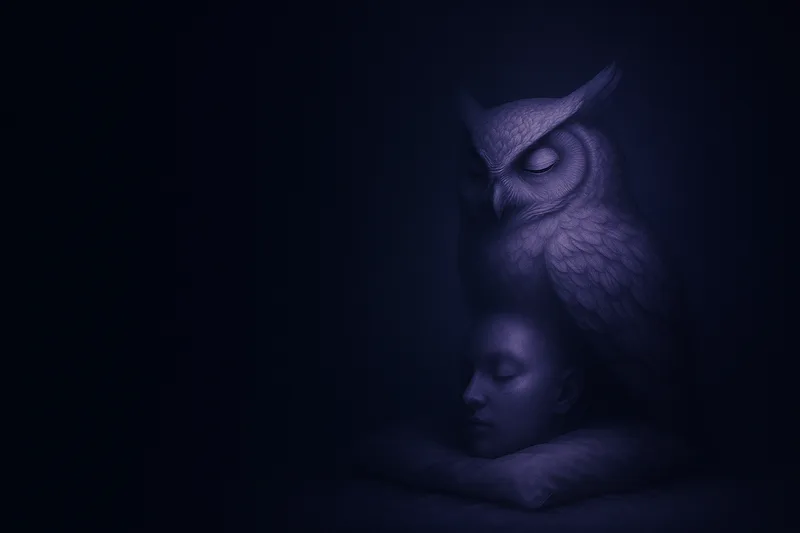
Owl Dream Meaning: Wisdom, Watchfulness, and the Night Mind
Balanced guide to owl dream meaning using psychology, spirituality, and culture. Clear scenarios and steps to interpret your owl dreams with care.
Balanced guide to owl dream meaning using psychology, spirituality, and culture. Clear scenarios and steps to interpret your owl dreams with care.
Owls live at the edge of light. They hunt when others sleep, glide without sound, and stare with an intensity that feels personal. Meeting an owl in a dream can stir the body, either with a tightening alarm or a calm that feels like being seen. People often wake wondering if they missed a message.
There is no single meaning, because dreams speak in layered images. In some hearts, the owl is a teacher. In others, it is a sign that something hidden is moving. For a few, it brings an old story about death or misfortune that was learned from family or film. These different threads can coexist, and your mind picks whichever thread best matches your life right now.
This page offers possibilities, not verdicts. We will look at the owl through psychology, archetypes, spiritual symbolism, and cultural frames, then walk through situations that tend to appear in owl dreams. You will find questions to ask yourself and gentle ways to work with the dream in the days that follow. The goal is not to decode a riddle but to stay with the feeling long enough to discover what it wants you to notice.
Dreams About Owl: Quick Interpretation
If you need a fast read: an owl in dreams often points to seeing in the dark, meaning awareness in the parts of life that feel confusing, secretive, or emotionally foggy. It can signal careful observation, intuition that grows in quiet, or a warning to slow down and notice subtle cues. When the owl feels ominous, it may indicate anxiety about loss, change, or the unknown. When it feels kind or neutral, it may highlight insight, protection, or timely guidance.
Context matters. An owl perched nearby in a calm scene has a different feel from an owl crashing through your window. An owl looking straight at you can signal a call to honesty or to boundaries. The color, size, and setting add nuance. A white owl, for some, suggests clarity or transition. A dark owl might emphasize mystery or fear of what you cannot yet name.
Be careful not to treat the owl as a prediction. Dreams often rehearse emotions, not events. Your mind is trying to show you how you feel about what is happening, especially where you have not yet found words.
Most common themes:
- Seeing in the dark, intuition sharpened by quiet
- A messenger image, highlighting something you need to notice
- A call to patience and watchfulness before action
- Fear of the unknown or of approaching loss
- Protection and guidance when the owl feels calm
- Boundary issues, especially if the owl enters your home uninvited
- Transition energy, endings and beginnings held at the same time
- Curiosity about hidden motives, either yours or others'
- The need to honor solitude and thoughtful timing
If you only remember one thing, remember this: the owl often asks, what needs your full attention when the noise dies down?
How to Read This Dream: The Three-Lens Method
When a symbol carries many meanings, you need a steady method. Try seeing your owl dream through three lenses: emotional tone, life context, and dream mechanics.
Lens A, Emotional tone: How did you feel when the owl appeared, and how did that shift as the scene unfolded? Dream images borrow power from emotion. Calm awe suggests insight or guidance. Panic suggests a threat response or a boundary issue. Mixed feelings often point to change that you want and fear at the same time.
Lens B, Life context: What in your week could have primed an owl image? Late-night study, secrecy at work, a complicated relationship, quiet time in nature, or a story you heard. Dreams often remix fresh material with older memories. Family stories about owls may color the dream. Your spiritual background may also steer the tone.
Lens C, Dream mechanics: What did the owl do, where did it appear, and how did the dream end? Details matter. A bird at the window is different from an owl on your shoulder. Silence is different from a hoot that echoes. Was there light or fog? Did the owl initiate contact or keep its distance? Did you act or only watch?
Questions to consider:
- When the owl looked at you, what did your body feel like in the dream?
- What was the most memorable sound or silence, and what does that echo in your day?
- Did you want to approach or avoid the owl? Why?
- What else was happening in your current life that also asks you to see in the dark?
- If the owl spoke, whose voice did it resemble in tone?
- Did you feel watched, guided, tested, or protected?
- What boundary was crossed or respected in the dream setting?
- Does the owl remind you of a book, film, or teaching from your background?
- If the dream repeated, what changed in your distance from the owl?
- What would you have needed in the dream to feel safe or ready?
Psychological Lens
From a modern psychological standpoint, owl dreams often highlight attention, pattern detection, and affect regulation at night. The owl can symbolize the part of you that notices what others miss. It might also represent anxiety scanning for danger in the dark. If you live with high stress or uncertainty, your brain stays alert after hours, and the owl can stand in for that late shift of the mind.
Owls also map onto avoidance and confrontation. Are you skirting a conversation that needs clarity? Are you watching without acting because you need more information? The dream might be rehearsing how to hold both patience and initiative. The silence of the owl can be your restraint. The sudden swoop can be your impulse.
Attachment and identity themes appear as well. An owl on your shoulder can feel like a wise ally, a secure internal figure. An owl attacking can reflect fear that a hidden truth will overwhelm you. In many cases, the dream is not diagnosing pathology. It is surfacing a tension. You can treat it as feedback on how you handle uncertainty, boundaries, and hidden motives.
Short-term memory residue also matters. If you read a story with owls, saw an owl video, or passed an owl figurine before bed, your mind may borrow the image. That does not erase deeper meaning. It simply provides the clay the dream uses.
Here is a small map to help you consider patterns:
| Dream feature | Often points to | Try asking yourself |
|---|---|---|
| Owl watching quietly from a distance | Careful observation, waiting for clarity | What information am I gathering before I decide? |
| Owl entering your home | Boundary questions, intimacy concerns, privacy | Where do I need to set or relax a boundary? |
| Owl attack or swoop | Threat response, fear of exposure, stress spike | What feels like it could strike without warning right now? |
| Carrying or feeding an owl | Nurturing your intuition, developing a skill | How am I caring for my insight or starving it? |
| Injured owl | Compromised intuition, exhaustion, blocked empathy | What is wearing down my ability to notice and care? |
| Owl speaking | Inner voice, conscience, value conflict | What truth am I ready to say out loud? |
Archetypal and Jungian Lens
As one perspective, the Jungian lens treats dream figures as living symbols connected to collective patterns. Archetypes are shared motifs that appear across history in stories and dreams. In this view, the owl often relates to the Wise Figure archetype, or to a nocturnal guide who sees through illusion. It can also appear as a companion to the Shadow, the parts of the self you avoid.
An owl that meets your gaze can point to a threshold. You are close to seeing something about yourself or your situation that you could not face before. The owl arrives at night because the psyche processes difficult truths when daytime defenses relax. If the owl is unsettling, that does not make it an enemy. It may be the face your own clarity wears when you have postponed it for too long.
There is also a trickster note at times. Silent flight, sudden presence, hard-to-read intent. The owl holds opposites, calm and predator, watchful and decisive. Jungians might say such images ask you to integrate opposites, to hold both patience and bold action, both solitude and connection. The dream can be a rehearsal for acting from a center that sees more than fear.
Treat this lens as an invitation. Archetypes inspire meaning, but they are not mandates. Your personal history will determine whether the owl reads as guide, challenger, or mirror.
Spiritual and Symbolic Meanings
Across many spiritual paths, owls sit at the edge of ritual, dusk, and deep seeing. They can feel like guardians of thresholds, sentries between seasons, or messengers that ask for quiet before clarity. In a dream, that can translate as a call to slow down and listen for subtle guidance, whether you frame that as inner wisdom, the sacred, or simple attentiveness.
Owls are also tied to transformation. They hunt, which reminds us that insight sometimes requires letting go of old habits. They rotate their heads and see widely, which can symbolize a shift in perspective. Some people experience the owl as a companion in grief or change, a sign that endings can be held with dignity while you prepare for what is next.
You do not need to force a spiritual reading. If the owl felt sacred, trust that. If it felt neutral, you can still honor it as a symbol of care in the dark.
Gentle framing: Meaning grows when you listen with patience, act with integrity, and allow the dream to ripen over days rather than minutes.
Small rituals can help. Light a candle and sit in silence for a few minutes, invite one clear question into your mind, then write whatever answers arise. Place an owl image on your desk to remind you to pause before acting. Thank the dream, even if you do not yet understand it.
Cultural and Religious Overview
Owls carry very different meanings across cultures. Some traditions honor them as wise guardians. Others associate them with death, sorcery, or bad luck. These differences come from local ecologies, stories, and religious teachings. Night birds that hunt silently can feel protective or unsettling depending on how your community learned to read the night.
When you meet an owl in a dream, your cultural background and family lore will shape the tone before you even think about it. That does not mean you must accept any fixed meaning. It means you can notice which teachings live in you and then decide how to relate to them now.
In the sections that follow, we will summarize familiar angles within several traditions. These are not rules, and communities are not uniform. Use what fits your path and set aside what does not. The goal is sensitivity, not certainty.
Christian and Biblical Angles
In the Bible, owls often appear in desolate landscapes and poetic passages that describe ruins or loneliness. They are named among creatures of the night in some translations. Because of this, some Christians inherit a sense of the owl as a sign connected to desolation or mourning. Others, reading the natural world as God's creation, hold owls as symbols of watchfulness and wisdom embedded in nature.
If you dream of an owl and you were raised within Christian imagery, you might feel a pull between caution and wonder. An owl perched in a quiet chapel could feel like a reminder to watch and pray. An owl crying in an abandoned town might echo the Bible's language of lament. The key is your felt sense in the dream and the setting.
For those who value discernment, the owl can represent spiritual vigilance. It may invite you to test spirits, to examine motives, and to avoid gossip or impulsive judgment. If the owl felt dark or oppressive, it might reflect anxiety about sin, secrecy, or judgment. This does not have to be read as doom. It can be an inner nudge to confession, repair, or healthier boundaries.
Common angles:
- Watchfulness in prayer
- A mirror for lament and wilderness seasons
- Testing hidden motives and spirits
- Wisdom that grows in quiet
If the dream felt protective, some people treat it as reassurance that even in dark valleys, guidance meets them. If it felt like a warning, consider practical steps, such as honest conversation, seeking counsel, or simplifying a chaotic schedule, rather than treating the dream as prediction.
Islamic Perspectives
Within Islamic traditions, views on owls vary by region and era. Scriptural sources do not assign a single meaning to owls, and many scholars caution against superstitions. In some communities, owls were historically linked to ill omen, while others saw them as part of God's creation, neutral until a person's response gives them color. In dream interpretation literature, meanings shift based on behavior, setting, and the dreamer's state.
If you dream of an owl, a helpful approach is to focus on ethical and practical guidance. Was the owl a calm observer or a source of disturbance? A calm owl might encourage sober reflection, patience, and seeking knowledge quietly. A disturbing owl could highlight anxieties, unwise company, or harmful talk. Either way, the dream can be an occasion for remembrance, prayer, and a return to balance.
Consider the adab of dreams: share only with someone wise and caring, avoid sensational claims, and weigh the dream against clear teachings. If the owl enters your home without invite and causes fear, that might reflect a perceived breach of privacy or worry about spiritual hygiene. If the owl guides you, it could point to seeking knowledge in measured steps.
Common angles:
- Caution against superstition
- Patience, knowledge-seeking, and sober reflection
- Privacy and household boundaries
- Checking fear against trust in God and practical action
Jewish Perspectives
Hebrew Bible passages mention owls among creatures of the night and in scenes of desolation, similar to some Christian readings. Later Jewish thought includes a range of views, from natural observation to folklore that casts certain night birds as ominous. Modern Jewish readers often treat animal symbols more as poetic devices than fixed signs.
In a Jewish frame, an owl dream could be read through themes of watchfulness, study after sundown, or the sober honesty of night. Torah learning long into the evening can feel owl-like, a steady attention in the quiet. If the dream had a mournful tone, it might echo collective memories of exile or personal experiences of loss.
At a practical level, the dream may invite actions rooted in tikkun olam and derech eretz. Where can you repair a small piece of what is broken? How can you speak truth without humiliation? If the owl felt harsh, consider whether your inner critic has taken on an exaggerated voice. If it felt companionable, you might be receiving support from the parts of yourself that value wisdom and patience.
Common angles:
- Night study and disciplined attention
- Honest mourning held within community
- Ethics in speech and boundaries
- Repair and small acts of kindness during difficult seasons
Hindu Perspectives
Hindu traditions are diverse, and symbols vary across regions and deities. In some strands, the owl is associated with Lakshmi as a vahana in certain depictions, connecting the bird to discernment and the ability to see hidden wealth, not only material but also ethical and spiritual. In other settings, night birds can be tied to inauspicious timing or caution. Context determines the tone.
If the dream includes an owl in a temple or during a ritual mood, it might suggest a need for sattvic clarity in a rajas-tamas heavy period. The quiet gaze could be a reminder to cultivate viveka, discrimination between what leads toward steadiness and what feeds confusion. If the owl felt unsettling, it could highlight tamasic heaviness or habits that cloud judgment.
The setting matters. An owl guiding you through a forest may represent inner guidance during a karmic knot. Feeding or caring for an owl can reflect nurturing your dharma, supporting the clarity you will need for choices ahead. An attacking owl could be a stress image that asks you to adjust food, sleep, or company that reduce clarity.
Common angles:
- Discernment and viveka
- Balancing gunas for clarity
- Respect for timing and quiet study
- Care for the household as a sacred space
Buddhist Perspectives
Buddhist traditions tend to read dreams through the lens of mind states, karma, and skillful means. Animals are not fixed omens but can reflect qualities of attention or confusion. An owl may mirror mindful watchfulness, the ability to see in darkness without agitation. It can also signal clinging to secrecy or fear of exposure.
If the owl in your dream felt calm, you might explore it as a symbol of sati, clear seeing that does not grasp. The silence of its flight can echo right speech, in which words are used carefully or withheld until timely. If the owl was menacing, it may represent aversion or projection, the mind casting a shadow and then fearing it. In that case, compassion practices can soften the scene.
Meditation allows you to meet the owl without adding stories. Note the sensations, the image, the emotion, and the fading. Then ask how to carry that attention into your day. The dream could be a training field, showing you how the mind meets darkness and what habits of attention might free you.
Common angles:
- Clear seeing without grasping
- Right speech and silence
- Meeting fear with curiosity
- Night as a teacher of impermanence
Chinese Cultural Perspectives
In Chinese cultural history, owls have been interpreted in contrasting ways. Some periods associated owls with inauspicious signs or filial concerns, while other artistic traditions appreciated the bird's striking form and keen senses. Folk sayings and local beliefs vary widely across regions and families.
In dreams, an owl might point to vigilance, the need to read subtle cues in relationships, especially around family obligations, business timing, or social harmony. An owl at the window could signal a boundary issue between private and public life. A peaceful owl might encourage patience in negotiations. A loud or disruptive owl might echo concerns about gossip or social missteps.
If you grew up with stories that treated owls as unlucky, notice how that story colored your dream. Then weigh it against your current values and context. Balance, moderation, and thoughtful timing remain steady anchors. If the dream leaves you uneasy, pair it with practical steps, a tidy living space, and careful words.
Common angles:
- Timing and harmony in relationships
- Respecting family boundaries
- Caution around rumors and face
- Patience in business or study
Native American Perspectives
Indigenous cultures across North America are diverse, and teachings about owls differ from nation to nation and even from family to family. Some traditions regard owls as messengers or teachers of night medicine, while others associate them with death or with taboos. It is important not to flatten these differences.
If you have a connection to a specific nation or community, seek guidance within that lineage. For some people, an owl might be a reminder to respect boundaries, avoid gossip, and move with integrity. For others, the appearance of an owl can be a serious warning tied to ceremonial protocol. In many communities, talking publicly about certain dream images is discouraged.
For readers without a direct cultural tie, approach with respect. The most helpful stance is humility. Recognize that lessons about animals live within relationships, language, places, and responsibilities. If your dream has an Indigenous tone, you might honor it through quiet gratitude, ethical action, and by learning about the people whose land you live on without claiming their teachings as your own.
Common angles heard in some communities include:
- Night medicine, attentive listening
- Boundary and speech ethics
- Respect for ceremonial protocols
- The seriousness of certain omens within specific lineages
African Traditional Perspectives
African traditions are wide and varied, shaped by language, region, and lineage. In some communities, owls have been linked to witchcraft or ill will, largely due to their nocturnal habits and calls. In other places, owls are read as keen hunters and watchers, respected for their ability to see what others overlook. Urban and rural contexts also differ.
Within a dream, the meaning often depends on social context. Are there conflicts, jealousy, or unresolved disputes? An unsettling owl might mirror social stress. Are you in a period of seeking guidance from elders? A calm owl may feel like permission to consult quietly and honor advice.
Many families hold stories about birds and signs. These stories can offer comfort or fear. If your dream bears that weight, you can honor your heritage while also checking for practical steps. Strengthen ties with trustworthy people, keep your home ordered, and address conflicts directly.
Common angles:
- Social vigilance and community dynamics
- Respect for elders and counsel
- Household protection practices
- Navigating stories of witchcraft carefully and responsibly
Other Historical Notes
In ancient Greek art, the owl appears with Athena, signaling strategic wisdom and citycraft. Its wide eyes fit the idea of seeing what others miss. An owl in a Greek-flavored dream might highlight thinking clearly under pressure or elevating strategy over impulse.
Ancient Egyptians had complex bird symbolism. While the specifics vary, night birds could evoke the mystery of the Duat, the underworld journey. An Egyptian-flavored owl might represent passage between states, tending to the thresholds of life and death with order and care.
Medieval European folklore often cast owls as companions to night watchmen or, in some tales, as eerie presences near ruins. This mixed tone filters into modern culture, where an owl can feel both learned and spooky. Knowing these threads can help you sort inherited moods from your own experience.
Scenario Library: What Happened in Your Dream?
Below are common owl dream situations, grouped by theme. Use them as starting points. The same scene can carry different meanings depending on your emotions and life context.
Watchful and Observant
An owl perched and watching you
Common interpretation: A quiet owl often points to observation and patience. You may be in a phase where seeing more clearly matters more than acting fast. The owl's steady gaze can feel like a prompt to tell the truth to yourself, especially about motives or dynamics you already suspect.
Likely triggers:
- Evaluating a decision
- Reading people at work or home
- Therapy insights emerging
- Late-night study or research
- A recent nature experience
Try this reflection:
- What fact am I reluctant to admit?
- What would acting a week later protect?
- If the owl were a mentor, what single sentence would it offer?
- Where do I need to switch from watching to doing?
An owl following you from a distance
Common interpretation: Following suggests a theme you cannot shake. It may be an unspoken concern or a protective awareness. If it felt comforting, you may be building trust in your intuition. If it felt eerie, you may fear being judged or exposed.
Likely triggers:
- Starting a new job or role
- Secret-keeping in a relationship
- Anxiety about social media scrutiny
- Remembering a moral lapse
Try this reflection:
- What do I think the owl wants?
- Where do I feel observed in my life, and by whom?
- What honest step would reduce this unease?
Threat and Confrontation
An owl attacking or swooping at your head
Common interpretation: Attack images often reflect a stress response to something you feel is unpredictable. The owl as attacker can symbolize a truth that feels like a strike. It may also show fear of criticism or of a secret coming out. If you defended yourself calmly, your system may be practicing grounded response.
Likely triggers:
- Harsh feedback at work
- A secret that might surface
- Sleep deprivation raising threat sensitivity
- Conflict with a sharp-tongued person
Try this reflection:
- What feels like it could hit me without warning?
- How can I prepare a calm boundary or script?
- Did I freeze, flee, or fight in the dream, and what does that teach me?
Being chased by many owls
Common interpretation: Many attackers intensify overwhelm. This can point to piling worries or multiple competing truths. It can also symbolize gossip or the sense that eyes are on you. The dream may be asking you to reduce inputs or choose one problem to face first.
Likely triggers:
- Group conflict
- Online attention or rumors
- Too many deadlines
- Health worries plus family stress
Try this reflection:
- Which one owl stands for the main issue?
- What can I postpone to regain steadiness?
- What restores a sense of safety in my body?
Bitten or scratched by an owl
Common interpretation: Injury suggests a boundary breach. If the owl injured you, perhaps a sharp truth cut too deep, or your self-criticism has teeth. If you injured the owl in defense, consider whether you are silencing your own intuition in order to avoid discomfort.
Likely triggers:
- Stinging comments from someone close
- Self-blame spirals
- Making a decision against your gut
Try this reflection:
- Where did criticism leave a mark this week?
- What would support look like right now?
- How can I give feedback without wounding?
Help, Care, and Protection
Helping an injured owl
Common interpretation: Caring for the owl suggests you are tending to intuition that has been neglected. You may be rebuilding trust with yourself after a period of noise, distraction, or burnout. The act of care is the meaning.
Likely triggers:
- Return to therapy or reflection
- A slower season after overwork
- Apologizing and repairing a relationship
Try this reflection:
- What daily habit restores my inner clarity?
- Who supports my slower, wiser pace?
- What boundary keeps this healing time intact?
An owl guiding you through a dark place
Common interpretation: Guidance scenes often arise during transition. The owl may represent a mentor, spiritual presence, or your own steady attention. The message is to trust slow steps. If the path opened as you walked, the dream affirms learning by doing.
Likely triggers:
- Moving, divorce, or job change
- Grief processing
- Starting a creative project
Try this reflection:
- What is the next small step, not the whole plan?
- Where can I accept not knowing yet?
- Who serves as a real-world guide right now?
Transformation and Identity
Turning into an owl, or an owl turning into you
Common interpretation: Transformation can indicate identity shifts. Becoming an owl suggests embracing watchfulness and nocturnal focus. You may be entering a season where solitude and study serve you. If it was frightening, you might fear becoming too detached or secretive.
Likely triggers:
- New parent routines at night
- Creative sprints after hours
- Doubts about becoming reserved
Try this reflection:
- Which owl trait would help me now?
- What guardrails keep solitude from isolation?
- How will I know it is time to return to daylight community?
Quantity and Scale
A single giant owl
Common interpretation: A large owl often magnifies a single issue. It can feel awe-inspiring or oppressive. If awe, the dream invites reverence for a big decision. If oppressive, it may reflect a looming responsibility or an authority figure.
Likely triggers:
- Leadership pressure
- A legal or financial decision
- Meeting someone you admire or fear
Try this reflection:
- What deserves this level of attention?
- Where do I need counsel rather than solitude?
- What would reduce this to a manageable size?
Many small owls filling a space
Common interpretation: Many small owls can feel either magical or chaotic. It may point to scattered insights that need organizing, or to social chatter that consumes your quiet time.
Likely triggers:
- Too many podcasts, books, or advice streams
- Social events crowding your week
Try this reflection:
- Which two insights are worth keeping?
- What input can I pause for a week?
Communication and Voice
An owl speaking to you
Common interpretation: A speaking owl carries the voice of conscience, intuition, or a mentor. Pay attention to tone and content. Kind firmness often signals a trustworthy inner voice. Harsh or shaming speech may reflect internalized criticism that needs softening.
Likely triggers:
- A decision that tests your values
- Remembering a teacher's advice
- Reading moral or spiritual texts
Try this reflection:
- If I write down the message, does it stand up to my values?
- How would a compassionate friend phrase the same guidance?
Settings
Owl in your bedroom or house
Common interpretation: Home settings usually point to the personal sphere and boundaries. An owl perched near your bed may highlight intimate questions, privacy, or nighttime routines. If it broke in, consider where you feel invaded or where you invited something in without thinking.
Likely triggers:
- New roommate or partner
- Late-night screens disrupting sleep
- Family secrets being discussed
Try this reflection:
- What boundary at home needs clarity?
- How can I make my sleep space feel protected?
Owl at work or school
Common interpretation: At work or school, the owl often mirrors performance observation. It may signal the need to be strategic, to gather data before proposing a plan, or to watch group dynamics with patience.
Likely triggers:
- Performance reviews
- Group projects
- Leadership changes
Try this reflection:
- Where should I slow down and listen before acting?
- What data would make my next move solid?
Owl over water
Common interpretation: Water usually represents emotion. An owl over water may show your rational attention hovering over deep feeling. The dream may ask for a balance between thinking and feeling. If the owl dipped into the water and lifted out, it can suggest integrating emotion into insight.
Likely triggers:
- Emotional conversations
- Therapy breakthroughs
- Creativity fueled by feeling
Try this reflection:
- Which feeling have I been watching instead of feeling?
- What safe outlet can hold these emotions?
Owl in a childhood place
Common interpretation: Childhood settings invite memory and earlier coping styles. The owl might be a wise visitor to an old story, asking you to re-see it with adult eyes. If fear rose, you may be revisiting a learned belief about danger.
Likely triggers:
- Family gatherings
- Revisiting old photos
- Parenting memories activated
Try this reflection:
- What did I learn about secrets as a child?
- What would I tell my younger self now?
Others
Someone else sees or is visited by the owl
Common interpretation: Watching someone else interact with the owl can project your concerns onto them. You might worry about their decisions, or you may see a quality in them that you are being asked to own.
Likely triggers:
- Concern for a friend
- Parenting worries
- Leadership over a team
Try this reflection:
- What in them mirrors something in me?
- Where can I support without controlling?
Modifiers and Nuance
Interpretation shifts with emotion, repetition, and life context. Pay attention to these modifiers.
Emotions: Calm awe leans toward guidance. Tight fear leans toward threat processing. Mixed feelings hint at ambivalence during change.
Recurring frequency: Repetition often signals a theme that persists. If the scene stays the same, you may be stuck in one stance. If it evolves, note the direction. Are you moving closer, or is the owl becoming less frightening?
Lucid or vivid quality: Lucidity can allow dialogue. If you were aware you were dreaming, the owl might be easier to engage. Vividness can indicate strong emotional charge or an important life transition.
Life events: After a breakup, owls may appear as guardians of boundaries and self-respect. During grief, they can carry quiet companionship. During pregnancy, they often reflect protective watchfulness or nighttime wakefulness.
Colors and numbers: White owls sometimes suggest clarity or transitions. Darker owls may emphasize mystery or fear. Numbers can add meaning. One owl often points to a central issue. A pair can raise partnership questions. Flocks can reflect social pressure or many small insights.
Use the table below to combine modifiers:
| Modifier | If present, consider | What it might lean toward |
|---|---|---|
| Calm emotion | Guidance, readiness | Integration of insight |
| Panic or dread | Threat rehearsal | Boundary or safety planning |
| Recurring weekly | Persistent life theme | Ongoing decision or unresolved conflict |
| Lucid awareness | Dialogue possible | Taking ownership of insight |
| After breakup | Self-protection, truth-telling | Rebuilding boundaries |
| During grief | Companionship in sorrow | Honoring endings and care |
| During pregnancy | Protection, nesting, night watch | Anticipation and vigilance |
| White owl | Clarity, transition | Clean decisions, ritual of change |
| Many owls | Overwhelm or community dynamics | Input reduction, social boundaries |
Children and Teens
For children, owl dreams often reflect what they watch and hear. Cartoons, picture books, and classroom themes can leave strong residues. Owls can be cute or scary depending on the story. Many kids also process bedtime separation and dark-room nerves through animal images.
When a child dreams of an owl, ask simple questions. Was it friendly or mean? Where was it? Did it make a sound? Avoid pushing for deep meanings. Children often use animals as stand-ins for teachers, parents, or fears. Night birds can carry the feeling of bedtime rules or the quiet of the house when others sleep.
Teens may use the owl image to explore identity. Late-night study, privacy, and social media watching all fit owl themes. An attacking owl could reflect online conflict or worries about being judged. A guiding owl can mirror growing independence and discernment.
Caregivers can keep the tone calm. Do not label the dream as good or bad. Offer comfort, routine, and a way to draw the owl in daylight. If anxiety persists, reduce scary media before bed and keep lights and sounds predictable. Invite teens to journal privately and to notice how late-night scrolling affects their dreams.
Checklist for caregivers:
- Ask, was the owl friendly, curious, or scary?
- Keep bedtime predictable and screens off at least an hour before sleep.
- Offer a small night light or comfort object if helpful.
- Invite drawing the dream and telling a short story about it.
- Model calm. Avoid dramatic interpretations.
- If nightmares persist, check stress at school, friendships, and media exposure.
Is It a Good or Bad Sign?
The wish for a clear omen is understandable. Owls can feel like messengers, so it is tempting to read them as fate. Dreams rarely predict events. They tend to map feelings, conflicts, and choices. Treat the owl as feedback about your way of seeing in the dark, not as a stamp of destiny.
A practical middle path is to combine felt sense with action. If the dream felt protective, act with steady patience. If it felt alarming, build boundaries and seek support. Either way, avoid superstition. Choose behaviors that would be helpful even if the dream were just a dream.
Use this table to ground your read:
| Scenario | Often experienced as | Common life theme |
|---|---|---|
| Calm owl on a branch | Reassurance | Quiet guidance, strategic patience |
| Owl breaks into house | Alarm | Boundary concerns, privacy stress |
| Owl attack | Fear | Threat processing, criticism anxiety |
| Feeding an owl | Warmth | Nurturing intuition, self-care |
| Many owls circling | Overwhelm | Too much input, gossip or group pressure |
| Speaking owl with kind tone | Clarity | Values guidance, conscience |
| White owl near water | Sacred or poignant | Transition with emotion, grief or renewal |
Practical Integration
Take the dream into your day with simple practices.
Journaling prompts:
- What did the owl see that I have not named?
- Where would waiting improve my next decision?
- What boundary needs a kind conversation?
- Which input stream can I pause this week?
Boundary-setting suggestions:
- Set a device curfew to protect quiet thinking.
- Decide one topic you will not discuss by text when emotions run high.
- Use a simple script for saying no: thank, state constraint, offer alternative.
Conversation prompts:
- I had a dream about an owl that made me think about how I rush decisions. Can we slow this choice down?
- I am noticing I need more quiet in the evenings. How can we support that at home?
Next-day plan checklist:
- Write 5 sentences about the dream without editing.
- Circle one word that carries the most energy.
- Do one small action aligned with that word, ideally before noon.
- Reduce one nonessential input for 24 hours.
- Thank the dream, then let it rest.
Treat the owl dream as a draft, not a verdict. Use it to test a small change you would be proud of even if the dream had never arrived. If the change helps, keep it. If not, adjust without drama. The value lies in the experiment.
Seven-Day Exercise
A week-long plan can stabilize insight.
Day 1, Name the sight: Write the dream in sensory detail, highlighting what the owl looked at. Choose one area of life where seeing more matters.
Day 2, Quiet hour: Protect sixty minutes of low-input time. No news or social feeds. Notice what questions rise.
Day 3, Boundary micro-step: Say no to one minor request. Use a kind script. Note the body response.
Day 4, Mentor voice: Write a letter from the owl to you. Keep the tone firm and kind. Extract one principle.
Day 5, Emotional swim: Spend 15 minutes with a feeling you avoided. Music or movement allowed. Journal one line about what you learned.
Day 6, Speak cleanly: Choose one conversation where you will be concise and honest. Prepare your first two sentences.
Day 7, Ritual of change: Mark transition with a small act. Tidy a drawer, light a candle, or take a dusk walk. Thank the part of you that watches in the dark.
Reducing Recurring Nightmares
If owl nightmares repeat, you can respond without fear. Start with sleep basics. Keep a regular sleep and wake window, dim lights in the evening, and reduce screens. Avoid scary or intense media before bed, especially content with jump scares or heavy conflict.
Imagery rehearsal can help. During the day, write the nightmare but change the ending so the owl scene becomes safe or instructive. For example, picture the owl landing and handing you a note that reads, wait two days, then decide. Practice the new version for a few minutes daily. This trains your mind to expect a different path.
Grounding techniques matter. Before bed, try a slow breath pattern, such as four counts in, six counts out. Name five things you can see, four you can touch, three you can hear, two you can smell, one you can taste. This calms the nervous system.
When to seek help: If nightmares cause significant distress, daytime fatigue, or avoidance of sleep, consider talking with a therapist who understands trauma or sleep. If the dream connects to a difficult life event, support can make the work gentler. Professionals can teach skills without imposing meanings.
Frequently Asked Questions
What does it mean when you dream about an owl?
An owl often highlights seeing in the dark. It can symbolize careful observation, intuition, and the need to slow down before acting. If you felt calm or curious, the dream may be pointing to guidance you already sense.
If the dream felt tense or ominous, it can be your mind rehearsing fear of the unknown, criticism, or boundary breaches. It is less about predicting events, more about showing how you are meeting uncertainty. Match the tone and setting to your current life to refine the meaning.
Spiritual meaning of owl dream?
Many people read the owl as a spiritual messenger of night wisdom, a sign to listen more than you speak. It can mark a threshold, asking for quiet rituals of change and honest self-examination.
You do not need to force a spiritual frame. If the dream felt sacred, honor it with stillness, a question, and a small act aligned with integrity. If it felt neutral, you can still treat the owl as a symbol of patient attention.
Biblical meaning of owl in dreams?
Biblical texts often place owls in desolate or nocturnal scenes. Some Christians read this as a cautionary tone, linked to lament or wilderness seasons. Others view the owl as a creature of watchfulness within a creation that teaches.
Let your felt sense guide you. If the dream invited prayerful vigilance, respond with careful words and steady habits. If it raised anxiety, focus on confession, repair, and practical boundaries rather than treating the dream as a prediction.
Islamic dream meaning owl?
Islamic perspectives vary and caution against superstition. An owl can invite sober reflection, patience, and privacy awareness, especially if it appeared calm. A disturbing owl may reflect social stress, unwise company, or anxiety rather than fate.
Ground your response in remembrance, practical ethics, and wise counsel. Share the dream only with someone trustworthy and avoid making firm claims about unseen matters.
Why do I keep dreaming about owls?
Repetition suggests a persistent theme. Your mind may be asking you to face a truth, set a boundary, or honor a need for quiet. If the dream is changing over time, notice whether you are moving toward or away from the owl.
Scan your week for triggers. Are you under new scrutiny, holding a secret, or navigating a transition? A small real-world change, like pausing an input stream or planning a conversation, often reduces repetition.
Is dreaming of an owl a bad omen?
Not necessarily. The omen frame can oversimplify. An ominous feel often mirrors stress or fear of the unknown. A calm or helpful owl can point to guidance and patience.
Treat the dream as feedback. Build sensible protections and honest conversations if you felt uneasy. If you felt supported, honor that by acting steadily on the insight you noticed.
Owl dream meaning during pregnancy?
During pregnancy, owls often reflect protective watchfulness, nighttime wakefulness, and attention to subtle bodily cues. The dream may be rehearsing how to listen to needs and set gentle boundaries.
If the owl felt threatening, it could be anxiety about change or health. Pair the dream with calm routines, reduced media at night, and conversations with your care team when you have concerns.
Owl dream meaning after a breakup?
After a breakup, the owl can symbolize self-respect and new boundaries. It may ask you to see patterns clearly, especially ones you missed while in the relationship. A calm owl suggests steadiness. An aggressive owl may mirror conflict residue.
Use the dream to guide small steps. Protect quiet time, reduce contact that reopens wounds, and write down two lessons you want to carry forward.
What if the owl spoke to me in the dream?
A speaking owl often carries the voice of conscience or a mentor. Pay attention to the tone. If it was kind and firm, the message may be close to your values. If it was shaming, it may reflect an internal critic that needs softening.
Write the words down and read them as if a friend said them. Would you accept the advice? Edit harsh phrasing into clear, respectful guidance and act on that version.
I dreamed of a white owl. Does the color matter?
Color can add nuance. Many people read a white owl as clarity, transition, or a sense of sacred pause. The mood of the scene still leads. A white owl by still water may highlight grief or renewal handled with care.
If the white felt sterile or cold, it may point to emotional distance. If it felt clean and peaceful, it may support a simple, honest choice.
What if the owl attacked me?
Attack scenes usually reflect a stress response. You may fear sudden criticism, exposure, or a decision you cannot take back. The dream can be your system practicing defense.
Prepare one or two boundary scripts, get rest, and reduce stimulating inputs before bed. If a specific person comes to mind, plan a time to talk with support present or choose to engage less.
I saw an owl in my house in the dream. How do I read that?
Home scenes often point to intimacy and privacy. An owl inside the house can highlight boundary questions, secrets surfacing, or nighttime routines that need care. If it perched calmly, it may bring guidance into your personal sphere.
If it broke in or caused chaos, look for where you feel invaded. Tidy your sleep space, clarify digital boundaries, and schedule one honest conversation if needed.
Is an owl dream a message from a loved one who passed away?
Some people experience dreams with symbolic comfort during grief, and owls can appear in those moments. Whether you interpret that as a message or as your mind making meaning, the important part is the care you felt.
If the dream eases your heart, allow it. If it unsettles you, focus on rituals that honor the person and support your sleep, and consider speaking with someone who understands grief.
How do I stop recurring owl nightmares?
Use imagery rehearsal during the day. Rewrite the ending so the owl brings a clear, safe outcome, and practice that version. Improve sleep routines, reduce late-night stimulation, and add a calming ritual before bed.
If nightmares persist or connect to trauma, reach out to a therapist trained in sleep or trauma care. Additional support can make a big difference.
What should I do after this dream?
Write the scene in a few sentences and circle one word that carries energy. Do one small action aligned with that word. Reduce one input stream for a day and see if your mind settles.
If a conversation is needed, prepare your first two sentences. Act in a way you would be proud of even if the dream had never happened.
Does culture change the meaning of owl dreams?
Yes, family stories and cultural teachings shape the tone. Some communities honor owls as wise, others treat them as cautionary. Neither view is universal.
Notice what you learned growing up and then check it against your life now. Choose the meaning that supports ethical, grounded action.
What if someone else had the owl dream, but it seemed about me?
Dreams of others can stir projection. They may be processing their own concerns that resemble yours. You can thank them for sharing without handing them authority over your choices.
If the dream resonates, use it as a mirror. Ask yourself what part of it fits your situation and what actions would be helpful regardless of the dream.
Can an owl in dreams predict death?
There is no reliable evidence that dreams predict death. Associations between owls and death exist in some traditions, but dreams typically reflect feelings about change, loss, or fear, not events.
If the dream raised anxiety about mortality, respond with care. Tend to health routines, connect with loved ones, and, if needed, speak with someone who can hold the conversation well.
How do I talk to my child about an owl nightmare?
Keep it simple and calm. Ask what the owl did and how it felt. Offer a drawing session and a night light. Avoid calling it a sign or a prophecy.
If the nightmare repeats, check for stress at school or in media. Reassure the child that dreams can feel scary and that their body knows how to calm down with your help.